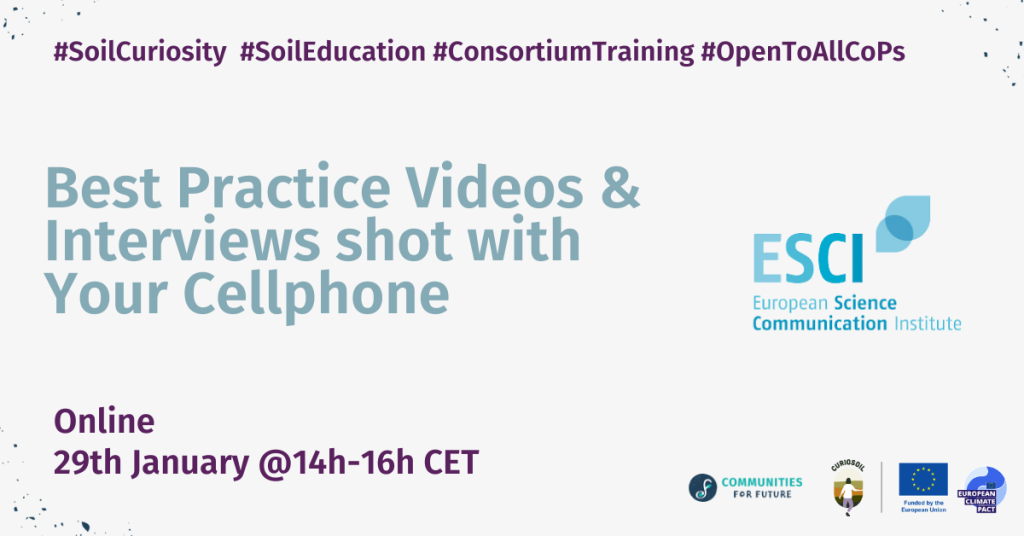
2024 CURIOSOIL Training – Best Practice Videos & Interviews with Your Cellphone
In a recent training session led by Ariane Bethusy, a seasoned video producer and director from the European Science Communication Institute (ESCI), participants were immersed in the concept of video production and storytelling. The course, designed to equip attendees with essential technical skills and creative strategies, focused on leveraging cellphones for content creation. From crafting compelling narratives to mastering technical settings, the session provided a comprehensive guide to producing impactful footage for social media videos, educational materials, and case studies.
The Importance of Storytelling and Preparation
Ariane began by emphasizing the foundational elements of video production: content, story development, structure, visuals, and sound. She stressed the importance of having a clear message and understanding the target audience before even picking up a camera. Using a social media campaign video as an example, she demonstrated how a well-structured storyline—complete with an introduction, a middle section exploring the topic, and a call-to-action conclusion—can effectively engage viewers.
Participants were encouraged to think critically about their storytelling approach, considering how visuals, interviews, and sound can enhance their narratives. Ariane also highlighted the importance of obtaining consent before recording or publishing images of individuals, especially children. She suggested using agreement forms and shared resources for creating such documents.
Technical Tips for Cellphone Video Production
Ariane shared practical tips for optimizing video quality, such as:
- Using the highest available resolution.
- Setting the aspect ratio to 16:9.
- Recording at 25 or 30 frames per second for smooth playback.
She also introduced the concept of B-roll footage—supplementary shots that support the main story—and encouraged participants to experiment with different angles and scenes to create visually engaging content. The 5-shot rule was another key technique discussed, which involves capturing a situation from multiple perspectives (wide shot, medium shot, close-up, and two additional shots) to build a cohesive sequence.
The Role of Interviews in Storytelling
Interviews were a central theme throughout the workshop. Ariane underscored their importance in storytelling and documentation, offering practical advice on how to conduct them effectively:
1. Authenticity – A personal approach makes your message memorable
2. Information Retention – Quick, clear info sticks in people’s heads rather than too complex explanation
3. Media Consumption Habits – Attention span is short on social media platforms
4. Narrative – Efficiency Always keep things dynamic and exciting
She gave practical tips on how to get clear and „good-to-use “ – answers:
- Clarity: Ask easy & understandable questions, and break complex content down into separate questions. Repeat key questions in other contexts to get more variety in answers
- Repetition: Ask interviewee to implement questions in their answers
- Connexion: Start with self-introduction (name & role in project/ profession/ position) as an icebreaker
- Good to have: elaborate personal approach of the interviewee
- Setting and Lighting: The environment should relate to the topic and avoid distractions. Proper lighting is crucial for a professional look.
- Framing and Eye Direction: Using grids for framing and directing the interviewee’s eye line can create a natural and engaging visual.
- Audio Quality: External microphones were recommended for clearer audio, and maintaining eye contact with the interviewee was emphasized for a personal touch.
Participants practised these techniques in breakout sessions, taking on roles as interviewers, interviewees, and observers. While time constraints limited the depth of these exercises, the hands-on experience provided valuable insights into the nuances of conducting interviews.
Feedback and Improvement: The Intercropping Video Case Study
Ariane led a discussion on a video about intercropping, a farming technique that involves growing two or more crops in proximity. While the video was informative, feedback from the team revealed that it might not be easily understood by those unfamiliar with the subject. Alice, an expert in the field, suggested clarifying the key message to make it more accessible to non-experts.
This exercise highlighted the importance of storytelling and visuals in conveying complex ideas. Ariane encouraged experts to shift their thinking from a purely scientific perspective to one that prioritizes storytelling and visual communication. The feedback was invaluable for refining the video, which was intended as an introductory piece for a larger project on the project website.
Stock Music and Video Goals
The use of stock music in video production was another topic of discussion. Ariane acknowledged that music selection can be subjective and depends on the video’s purpose. She emphasized that if a video achieves at least one of its two main goals—delivering a clear message and encouraging further exploration—it can be considered successful.
Editing and Practical Applications
The workshop concluded with a brief discussion on editing software and the practical use of footage within the consortium and community of practice. Ariane encouraged participants to gather a variety of footage, including B-roll and hands-on shots, to create dynamic and engaging videos. Questions about translating footage into different languages and video editing software options were also addressed, with Ariane emphasizing the importance of practice and learning from real-world experiences.
Final Thoughts
Ariane Bethusy’s workshop was a masterclass in video production and storytelling, offering a blend of technical expertise and creative strategies. By focusing on preparation, storytelling, and practical techniques, participants were left equipped with the tools to gather video footage of their hands-on events that will help to create impactful videos. For those interested in further exploring video production, Ariane’s emphasis on practice, feedback, and continuous improvement serves as a guiding principle. As the digital landscape continues to evolve, mastering these skills will be essential for effective communication and engagement in any field.
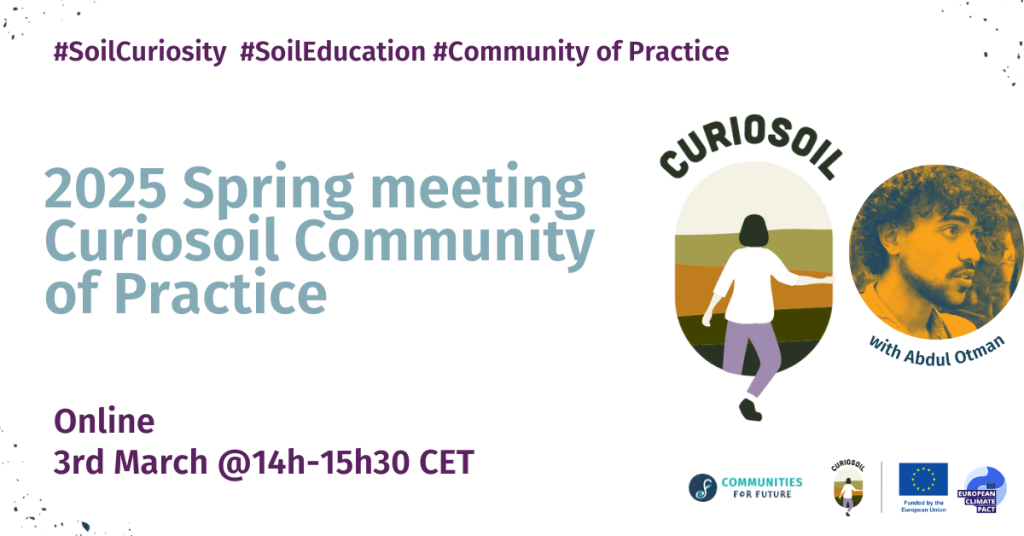
The next meeting is scheduled for the 3rd of March 2025, register now for the 2025 Spring meeting of the CURIOSOIL Community of Practice
Be sure to follow our CURIOSOIL LinkedIn page and subscribe to our LinkedIn CURIOSOIL Newsletter.