
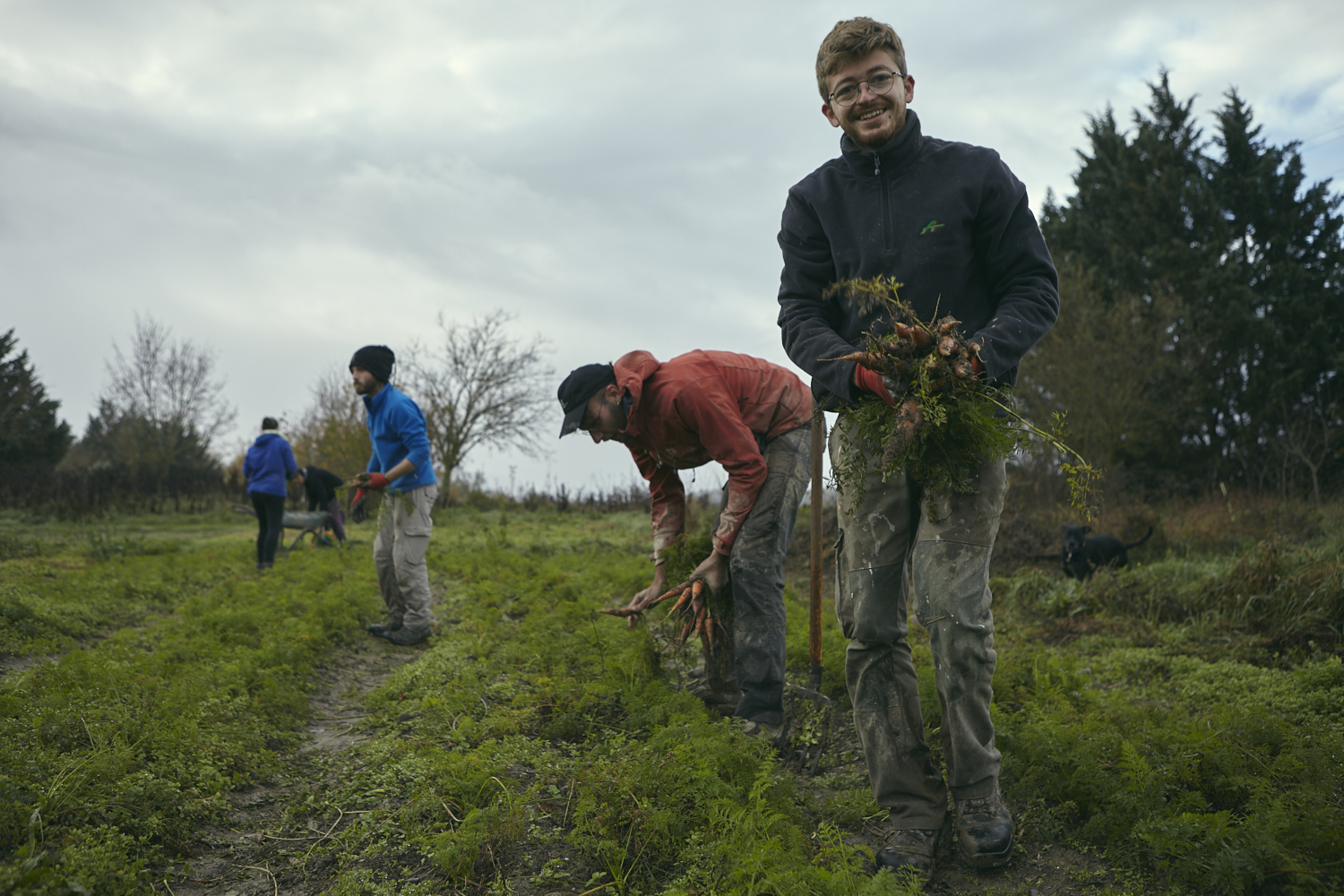
Reflections on a Visioning Exercise: What could a Just and Sustainable Food System actually look like?
As the European Commission presented its Vision for the Future of Agriculture and Food in late February, the ECOLISE Advocate team invited a diverse group of stakeholders actively working to transform food systems, like members of community-led initiatives, academics, policymakers, members of Non-governmental organisations (NGO) or Civil Society Organisations (CSO) to a visioning exercise. The exercise aimed to widen the scope of what is possible, by designing a future for food systems that is Just and Sustainable.
Context: Crisis of imagination
Many people, politicians included, seem caught up in a crisis of imagination, believing that “there is no alternative” to the current European way of life and the socio-economic systems framing it. The challenge is to be creative and imagine what a good life within planetary boundaries could look like. Community-led initiatives across Europe already provide practical examples and inspiration of what can be achieved, which makes our goal quite clear: we need to make sure EU policymakers understand the power of community-driven solutions.
How: ECOLISE way of doing advocacy
How do we build on community-led action to influence EU-level policies? ECOLISE, as a network of community-led initiatives for climate change and sustainability operating with sociocratic principles, has been actively engaging with participatory methods to engage members to co-create policy proposals, while promoting the diversity of solutions they bring. This has led to a structured 3-phase policy positioning process on food systems, which, by showcasing the day-to-day solutions developed by community-led initiatives, aims to inspire innovative policies for transformative food systems. Capacity building, participatory methods, alliance building and knowledge exchanges are as central to the process as is the planned outcome: a consolidated policy positioning document that showcases good practices, backed by partners.
The process: Visioning exercise methodology applied to food
Our member, The Transition Network, uses visioning exercises as a catalyst for revitalising social imagination, enabling communities to dream big, reimagine possibilities and explore alternative pathways. We chose the visioning exercise not to explore a sectoral transition to reach concrete goals; we chose it because the methodology allows us to imagine just and sustainable food systems as a key entry point for systemic transformation. Food systems—encompassing how we produce, distribute, consume food and deal with food waste—offer a powerful avenue for transformative change, while Community Led Initiatives have the capacity to reinvent our relationship with agriculture and food at a local level on a day-to-day basis.
What is: Community-led solutions that broaden the scope of what is possible
How do we transform food systems to make them just and sustainable? There are parts of them that we can build on, parts we should relinquish completely and parts we should reinvent to get there. In the first part of our visioning exercise, we harvested from participants a wide group of ideas that consolidated the “What is” of food systems.
You can find the ideas that emerged here, grouped in overarching topics
What if? Envisioning alternative futures and generating imaginative ideas about what could be
The visioning exercise is where we ignite the collective imagination of the people present to come up with a vision for the future of food systems, by taking a short trip to the future.
Moving beyond the “What is”, the “What if” invites us to use our collective imaginations to bring to life the future we want.
The mindset behind visioning is essential to its success:
- Multiple visions are invited, as they coexist with each other.
- Shifting our mentality from ‘Yes, But’ to a culture of ‘Yes, And’.
- Seeking complementarity in different visions .
You can find the ideas that emerged here, grouped in overarching topics.
What.. next?
Mapping and visioning was only the beginning of our participatory policy positioning process. In the spring and summer of 2025, we will dive deeper into the topics that emerged. Through participatory methods such as sociocracy and deliberative dialogues, participants will prioritize key areas of policy action, which will serve as the foundation for the final policy positioning document. Discussions will be facilitated to refine thematic priorities and co-create a framework for consolidating knowledge. This collaborative process ensures that the policy recommendations are grounded in the lived experiences of community-led initiatives and aligned with the broader goals of just and sustainable food systems.
Join us in advocating for a shift towards decentralized, community-driven, and regenerative food systems to enhance resilience, sustainability, and equity.
Do you have ideas? Would you like to join this process?
Join our Next Event: Building Common Ground: Policy Action for Just and Sustainable Food Systems
Date: Monday, April 7
Time: 13:00 – 14:30 CET
ECOLISE is excited to invite you to the next Participatory Policy Positioning Process event on Just and Sustainable Food Systems. Join us in shaping EU-level policy recommendations to support community-led initiatives and local governments in achieving sustainable food production, distribution, and consumption.
