
Streams of Care: Restoring Water, Community and Hope in Cova da Beira
Written by: The Ananda Marga Pracaraka Samgha team.
In the mountain landscape of Cova da Beira, central Portugal, water has long travelled through levadas, traditional channels that guide water from springs and streams towards fields, orchards and farms. They are practical infrastructure, but they are also much more than that. Each levada carries generations of knowledge about how to share a scarce resource, care for the land and cooperate across property boundaries.
Streams of Care: Community-Led Water Resilience from Cova da Beira grew from a simple but urgent observation: this living heritage was becoming increasingly fragile. Sections of the levada network were obstructed by vegetation, sediment and storm debris. Maintenance responsibilities had become unclear, and the local farmers’ irrigation association for the Goia system was no longer active. At the same time, the region was facing hotter and drier conditions, recurrent wildfire, intense rainfall events, erosion and the gradual abandonment of agricultural land.
For farmers, a blocked channel can mean that water does not reach the land when it is most needed. For the wider landscape, the loss of active water systems and land stewardship contributes to a cycle of dryness, degradation and vulnerability. For the community, it can create a quieter loss: the feeling that a shared resource, once maintained collectively, has become nobody’s responsibility.
The initiative began from Ananda Kalyani, an eco-spiritual and community project near Paúl, and is currently being implemented by Ananda Marga Pracaraka Samgha through ECOLISE’s Funding Fairer Futures programme and the Regenerative Communities Fund. Its purpose is to restore and care for levadas while rebuilding the relationships that make long-term stewardship possible. Rather than treating water resilience only as an engineering problem, Streams of Care treats it as an ecological, cultural and social practice.
Care becomes practical
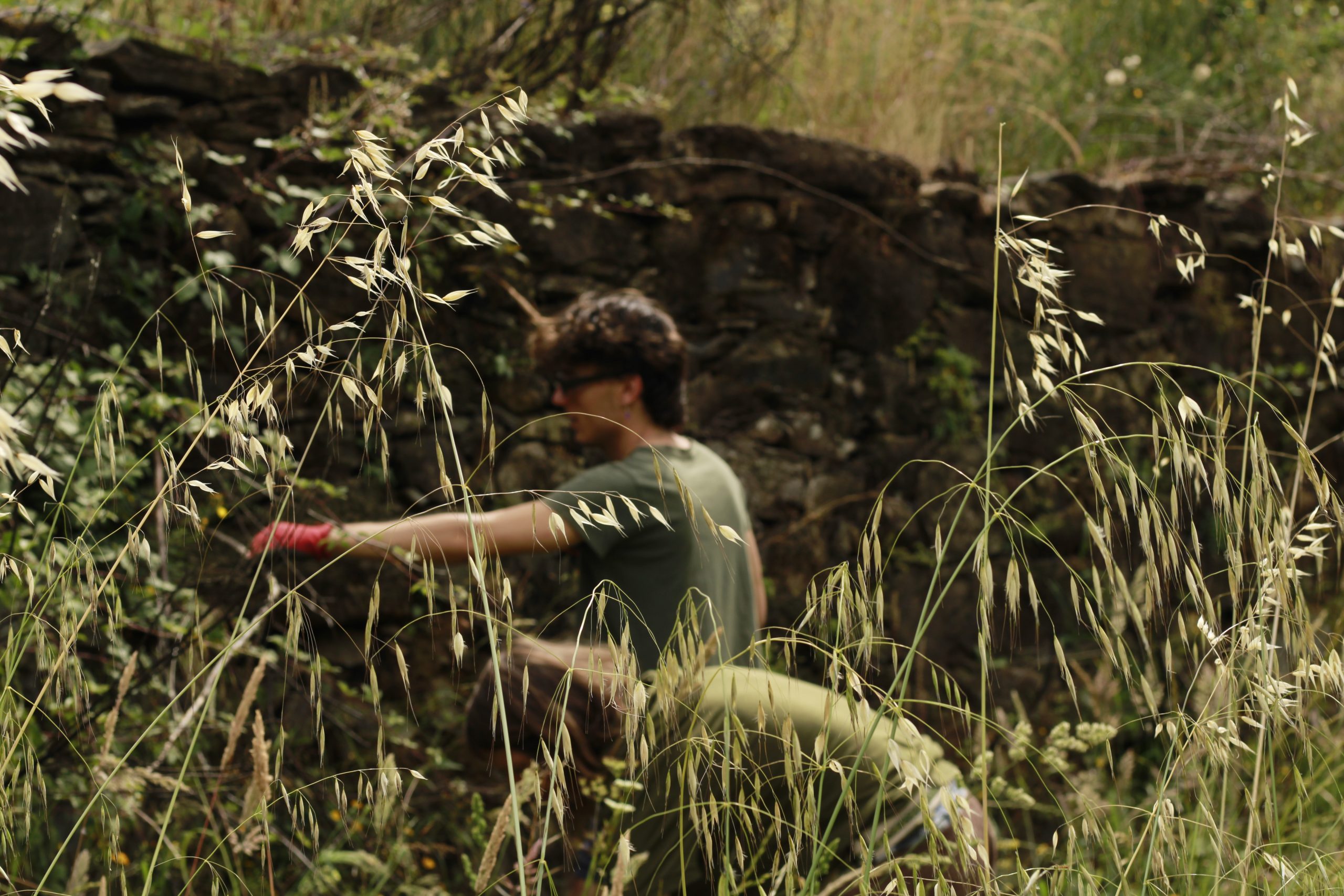
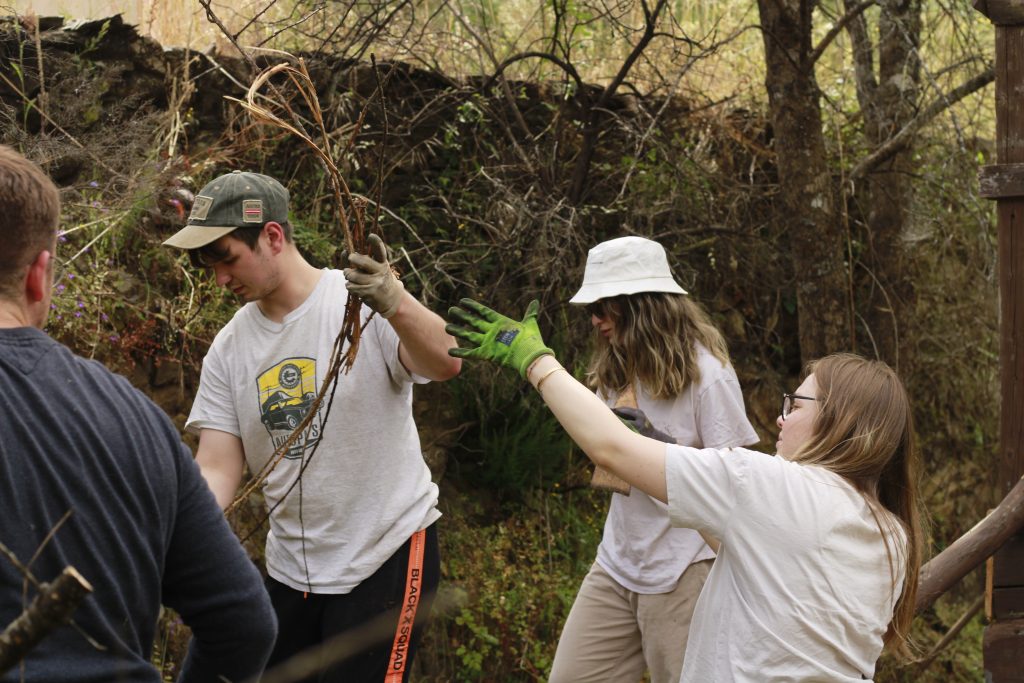
The work is direct and physical. Community members, farmers, workers, volunteers and young people come together to clear vegetation, remove accumulated material and reopen the path of the water. They learn how the system works, why maintenance matters and how local water stewardship connects with soil protection, agriculture, drought adaptation and wildfire resilience.
Across the initiative’s community actions, approximately six kilometres of levadas in the Paúl area have been cleaned, alongside restoration work on sections at Ananda Kalyani. Four community-based activities engaged 124 people, with 18 volunteers mobilised to support local farmers. The work has also involved 47 young participants and youth leaders from eight countries, connecting a very local water system with a wider European conversation about climate adaptation and community responsibility.
On 4 September 2026, another team worked on the levada at Ananda Kalyani. Nine people from six countries, including four women, cleared approximately 200 metres. Before beginning, the group learned about Streams of Care and discussed how the channel supports more sustainable water use. The diversity of the team mattered: people who had never seen a levada before worked alongside those more familiar with the land, and practical work became a shared language.
One of the most powerful moments in a levada action is also one of the simplest: after hours of cutting, lifting and clearing, water begins to move again through a section that had been blocked. The result may look modest on a map, but standing beside the channel it is immediate. The sound and movement of the water show that collective effort has changed something real. Tiredness turns into satisfaction; strangers begin to feel like a team; and an inherited system that seemed neglected becomes visible again as a living commons.
Water resilience after fire
Cova da Beira cannot speak about water without speaking about fire. Wildfires affect vegetation, soil structure, biodiversity, livelihoods and the capacity of the land to absorb and retain rain. After severe fire, exposed or water-repellent soils can accelerate runoff and erosion. When intense rain arrives, water may move rapidly across the surface instead of infiltrating, carrying ash and soil with it. Drought and fire are followed by sudden water damage: different expressions of the same loss of landscape resilience.
Levadas are not a stand-alone solution to wildfire, and we do not claim that they can prevent fires by themselves. Their importance lies within a wider mosaic. Functioning water systems, actively cared-for agricultural land, healthy soils, diverse vegetation, rainwater-harvesting structures and organised communities all contribute to a more resilient territory. Restoring a levada therefore creates an entry point for a much larger conversation about how water moves through the landscape before and after fire. This connection is being deepened through practical learning on post-fire land: observing erosion and vegetation recovery, exploring rainwater harvesting and small nature-based structures, mapping fire and water, and designing settlements and forests that consider water availability, fuel continuity, biodiversity, access and long-term maintenance together. Streams of Care brings the local case and the lived knowledge; youth and international learning activities bring comparison, new tools and energy.
The initiative is open by design. People do not need specialist qualifications to take part, and tasks can be explained, demonstrated and adapted to different levels of experience and physical capacity. This lowers the threshold for participation by young people, international volunteers and community members who may not usually see themselves as environmental practitioners.
Youth empowerment is not limited to inviting young people to attend. Participants learn through action, document what they observe, share examples from their countries and help formulate questions and recommendations. International participation also makes visible that traditional water systems exist in many forms across Europe and beyond, and that rural communities face related challenges of depopulation, climate stress and weakened collective governance.
Gender inclusion is supported through intentional participation and attention to who is given space to learn, speak, facilitate and take responsibility. The 4 September team, for example, included four women among nine workers. At the same time, we know that counting participants is not enough. Meaningful inclusion requires accessible communication, different types of tasks, respectful group culture and recognition of practical, local and lived knowledge – not only formal expertise.
There is still room to improve, particularly in reaching people who face mobility, economic or social barriers to participation. Future actions need better accessibility planning, transport support where possible, adapted roles, and stronger connections with organisations working with marginalised communities and people with disabilities. A community resource can only be called a commons when the community can genuinely influence and care for it.
What support is needed
Volunteer energy can reopen a channel, but it cannot replace public responsibility, technical expertise or stable local coordination. Long-term progress depends on partnerships between farmers, community organisations, the Parish Council of Paúl, the Municipality of Covilhã and relevant services working in water, agriculture, forestry, civil protection and climate adaptation.
The immediate need is a participatory map of the levada network: where channels run, who uses them, which sections are active, where blockages recur and what restoration is most urgent. This should lead to an annual maintenance and restoration plan with clear roles, an agreed calendar, technical guidance, appropriate tools and modest but reliable financial support. Some interventions can be carried out through community workdays; others require machinery, specialist assessment, permissions or public investment.
Funding such as the Regenerative Communities Fund is valuable precisely because it supports the connective work that conventional infrastructure funding often overlooks: convening people, building trust, organising volunteers, documenting results, mentoring groups and translating local experience into policy dialogue. Continued support is needed not only for one-off cleaning, but for coordination, monitoring, learning and follow-up.
Our message to policymakers is straightforward: recognise traditional levadas as part of contemporary climate-adaptation infrastructure and as cultural commons worthy of care. They should not be romanticised as relics, nor left to disappear because no single actor can maintain them alone.
We ask local authorities, farmers, community organisations and technical services to establish a local working group and co-create an annual levada maintenance and restoration plan for Paúl and the surrounding territory. The plan should clarify responsibilities, support participatory mapping, identify priority sections, connect community action with professional support, and integrate traditional water systems into wider wildfire-resilience and climate-adaptation strategies.
Policy should also make participation possible. Small community organisations need proportionate funding, accessible procedures and recognition of the time required to coordinate volunteers and relationships. Young people should be invited into real decisions, not only awareness campaigns. Farmers’ knowledge should be treated as essential evidence. Inclusion should be budgeted for through accessible formats, transport and adapted participation
Streams of Care is about restoring the flow of water, but it is equally about restoring the flow of responsibility between people. A levada only functions when many small acts of care connect: someone notices a blockage, someone brings a tool, someone shares knowledge, someone opens access, someone coordinates a group, and someone in public office chooses to listen and support.
The changes already visible are measured in kilometres cleared, metres restored and people involved. Yet the deeper change is relational. Farmers have received practical support. Young and international participants have encountered local ecological knowledge through their own hands. Community members have seen that collective action can produce an immediate result. Water that was obstructed has moved again.Our hope is that this initiative helps shift the story from abandonment to stewardship. Climate disruption can make communities feel powerless because the scale of the challenge is so large.
A levada reminds us that resilience is often built through a line of connected actions. We may begin with one blocked section, one farmer, one workday and one conversation. When those efforts are joined and supported, they can renew a landscape – and the community that belongs to it.