
Small Communities, Big Change: How a Neighbourhood Became a Living Lab for Regeneration
“If we wait for governments, it’ll be too little, too late. If we act as individuals, it’ll be too little. But if we act as communities, it might just be enough, just in time.” – Rob Hopkins
Written by: The Vestigium team
Back in 2011, in a neighbourhood in Zagreb, Croatia, some people felt there was no place to meet, children had few meaningful activities close to home, older people felt isolated, families hardly knew each other, and green public spaces were disappearing. Then, six women came together and founded Vestigium, a place where people could learn together, create together and discover that sustainability is not about sacrifice, but about improving quality of life.
Vestigium means “footprint”. From the beginning, our ambition was not to leave a large footprint on the planet, but a positive footprint in our community. Over the years, this idea has grown into one of Zagreb’s most active community centres. Every year we organise more than a thousand educational, cultural, environmental and social activities with participation at the core: people are not just visitors but active creators of their community.
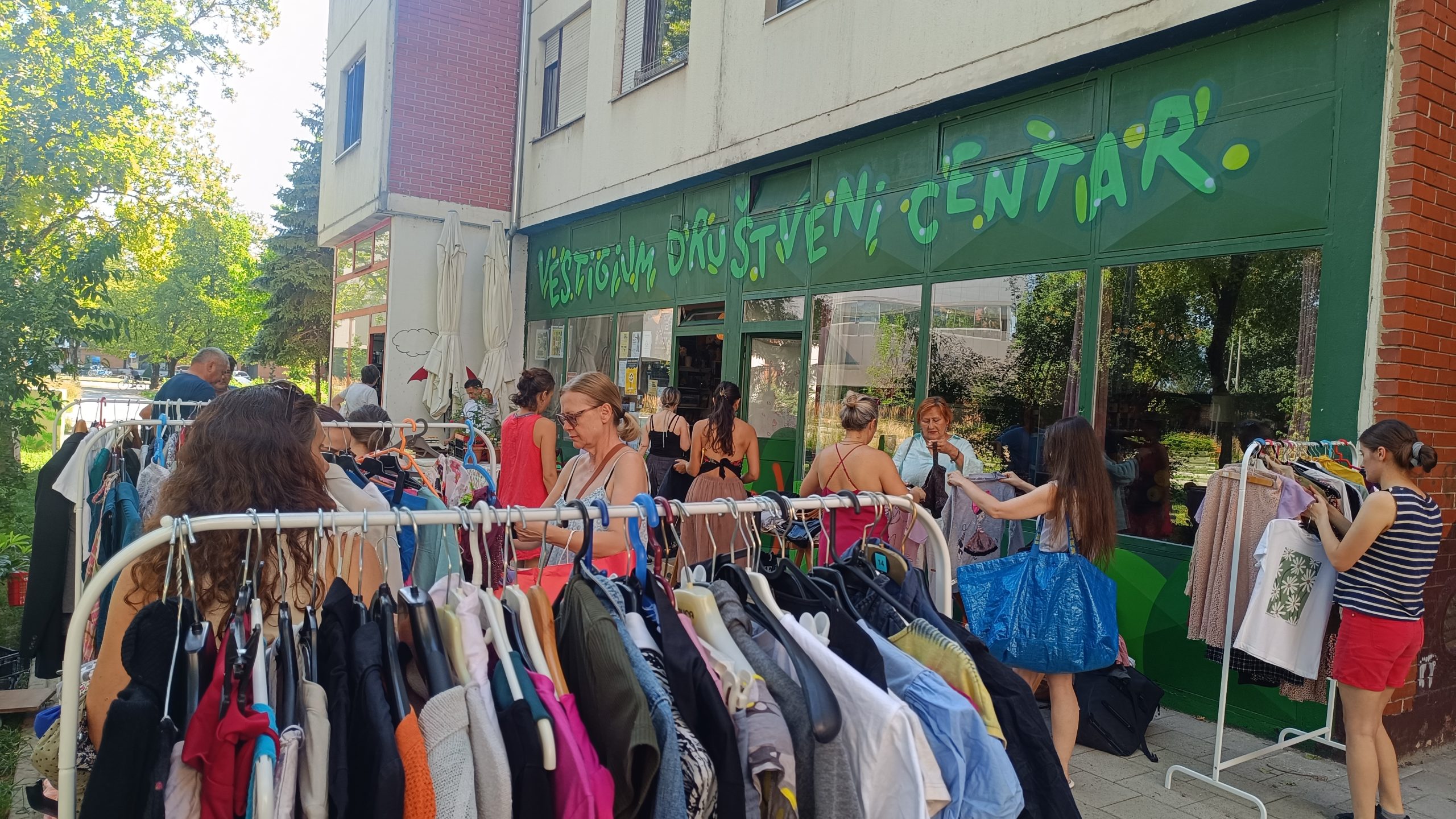
For years, we have organised regular farmers’ markets connecting citizens directly with local producers and supporting sustainable local food systems, we’ve held clothing exchanges where hundreds of garments found new owners instead of becoming waste, and also organised textile upcycling workshops, where people could transform discarded fabrics into useful and beautiful new products.
Our gardening activities ranged from house plant exchanges and workshops on growing microgreens to practical fruit tree pruning and grafting workshops, and ir has give the opportunity to people to learn how to grow food in small urban spaces, preserve biodiversity and strengthen local food resilience.
Climate Cafés have created safe spaces where people openly discussed climate anxiety, climate justice and practical local solutions. Instead of leaving participants feeling powerless, these conversations inspired collective action: participants organised a neighbourhood clean-up together, proving that dialogue can quickly become action.
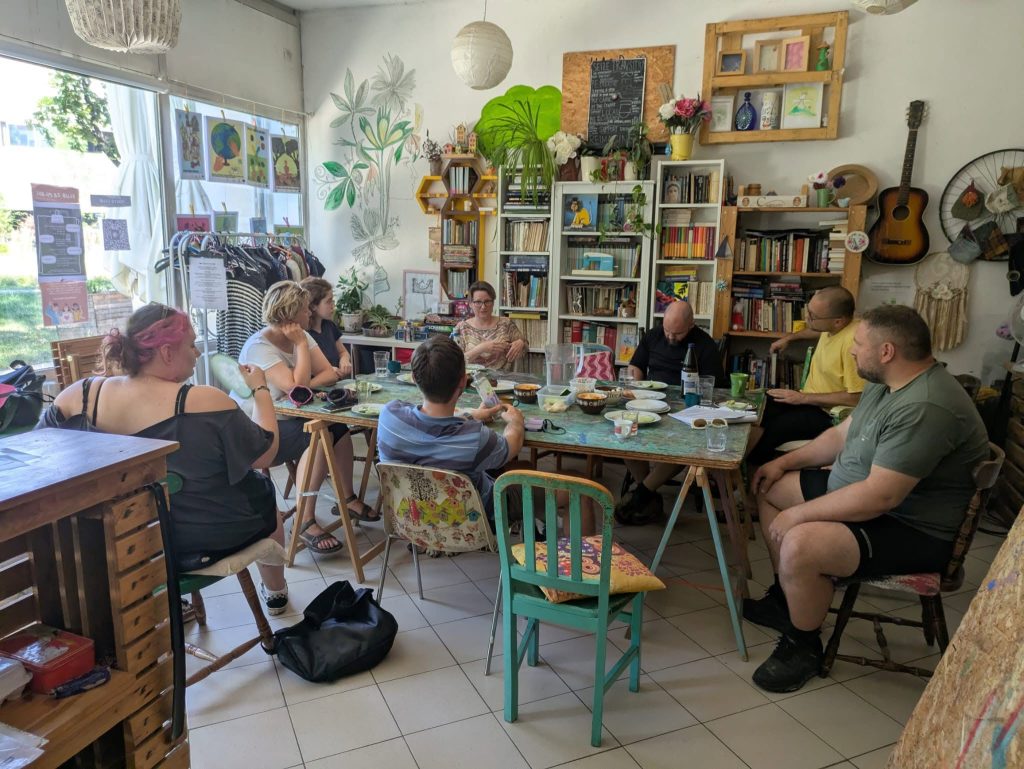
Young people also became active changemakers. Through the textile art workshops, they created flags, banners and creative installations using discarded textiles. Sustainability became something they could touch, make and proudly present to others rather than simply hear about in a classroom. And in that same line, our project also strengthened cooperation with schools, as teachers became interested in creating school gardens. Together we established vegetable beds, flower gardens and aromatic herb gardens for pollinators, where children now continue learning through practical experience.
Another important achievement was strengthening cooperation with local decision-makers. Through initiatives such as Flower festival, planting in public spaces and raised garden beds schools, residents, schools, neighbourhood councils and local authorities worked together to improve public spaces. Rather than asking communities what they need, local representatives increasingly began asking how they could work together with us.
International cooperation became another source of inspiration. Through ECOLISE and the Regenerative Communities Fund we exchanged knowledge with partners from Finland, France, Spain, Portugal and many other countries. Although our communities differ in size and culture, we discovered that we face similar challenges: climate change, loneliness, loss of biodiversity and the need to rebuild trust between people. Sharing experiences made every local success feel part of a much larger European movement.
Perhaps the greatest impact cannot be measured by numbers alone. We have seen visitors become volunteers, volunteers become workshop leaders and workshop leaders inspire entirely new community initiatives. International volunteers introduced Climate Cafés and Stitch & Bitch gatherings. Local residents began organising activities themselves. Teachers created gardens. Citizens approached us with ideas instead of waiting for solutions.
This is what regeneration looks like.
Circular economy is often discussed through recycling statistics or waste management policies. For us, it starts much earlier. It begins when neighbours exchange clothes instead of buying new ones. When local food replaces long supply chains. When broken objects are repaired instead of discarded. When seeds are shared freely. When knowledge is exchanged without expecting anything in return. Circular economy is ultimately about rebuilding relationships, between people and with nature.
If we could send one message to policymakers, it would be simple: Support communities before problems become crises!
Small neighbourhood organisations can create extraordinary impact with relatively modest resources. We need long-term support rather than short-term projects, accessible public spaces where communities can meet, and trust that citizens themselves often know the best solutions for their neighbourhoods.
Our experience has shown that regeneration is not only about planting trees or reducing waste. It is about rebuilding relationships, creating belonging and helping people believe that together they can shape the future of the places where they live.
At Vestigium we often say that every garden bed, every repaired shirt, every conversation over coffee, every shared meal at the farmers’ market and every new volunteer is another small seed of change.
One seed may seem insignificant. But when thousands of communities across Europe plant those seeds together, they become a forest of hope.