
Seventy people, one dream: The ecovillage that sparked a movement
Do you doubt the actions of one person can make a difference? How about seventy?
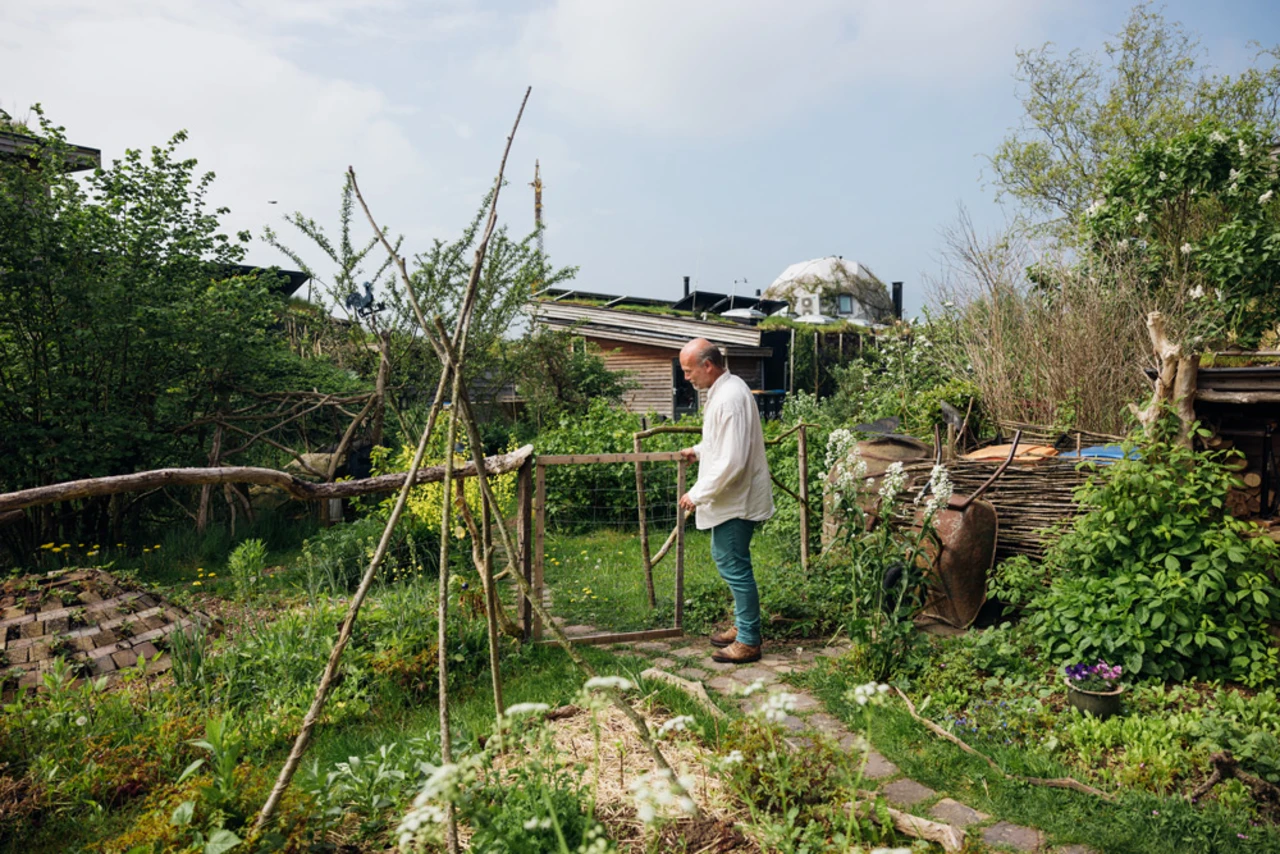
That was the number of people who came together in Olst, a small Dutch village of 5,500 inhabitants, to build something extraordinary: the Aardehuis ecovillage. Between 2012 and 2015, with the help of 2,000 volunteers from around the world, they created a neighbourhood of self-sustaining houses and a community centre on 1.2 hectares of land.
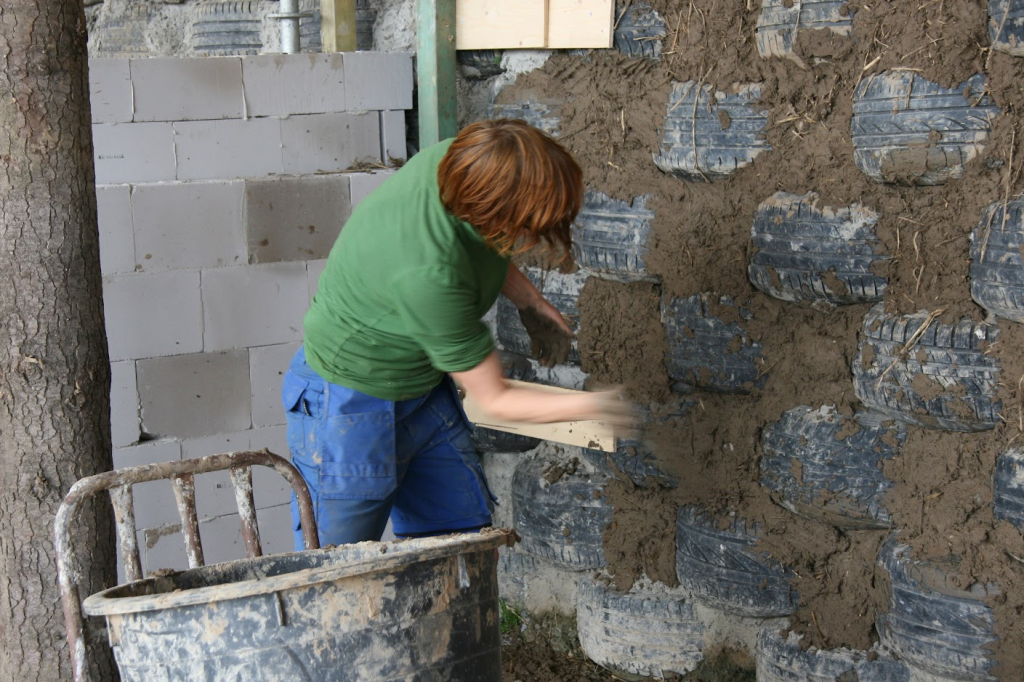
The idea first took root in 2005, when a group of families began asking themselves how they could respond to the climate crisis and biodiversity loss. They were inspired by the concept of “earthships”, homes built with recycled materials like car tires, straw bales, and reclaimed wood. The dream was bold: to build their own future with their own hands, at low cost, and in harmony with the planet.
But dreams meet reality quickly. In the Netherlands, land is scarce and expensive. For projects like an ecovillage, this scarcity makes it nearly impossible to find enough space. The timing also worked against them: they were planning in the wake of the 2008 financial crisis, with no real access to collective financing options.
In the end, twenty-three families privately financed the project, forced to settle for just over one hectare when really, they needed five. The decision to move forward anyway was a defining moment. It meant cramming houses, shared spaces, and infrastructure into a tight plot, leaving no room for large-scale food production.
The limitations were deeply felt. But instead of abandoning the idea, they embraced creativity.
The overcrowded design forced them to think differently about how to live together, share resources, and connect with their wider community. It also revealed the fragility of relying only on themselves: food, energy, and space all became part of a puzzle that could only be solved with cooperation. What began as frustration slowly turned into a sense of resilience and a deeper understanding that solutions to the climate crisis must be collective.
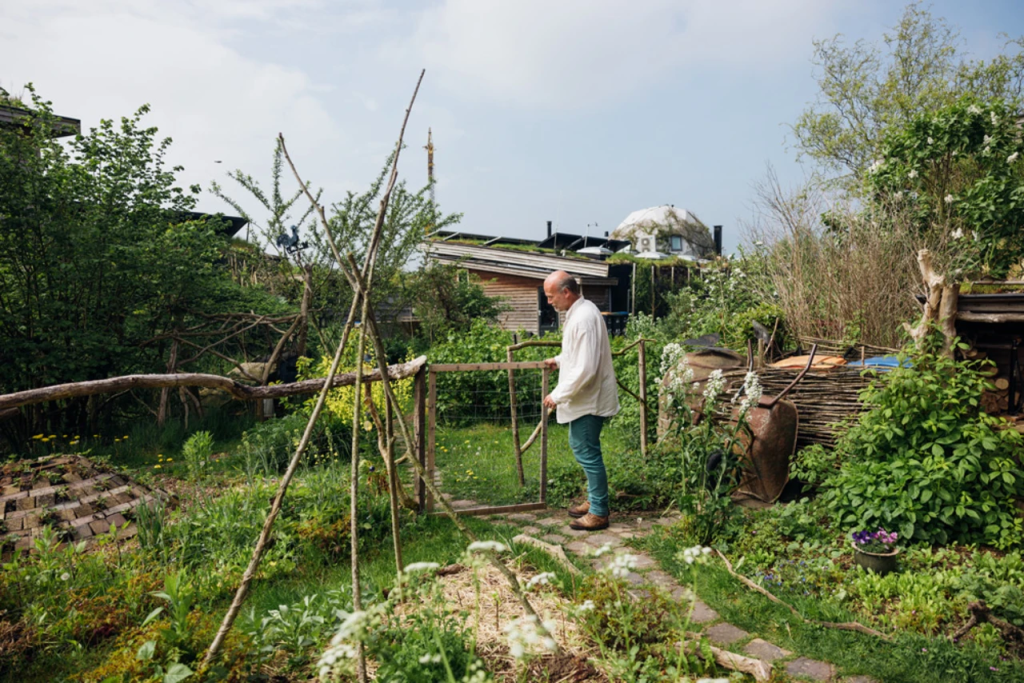
Their response was cooperation, inside the ecovillage and with the wider town of Olst. They made a deal with the municipality to “adopt” an extra hectare of land for community use. Through a foundation called Edable Olst-Wijhe, they turned this space into a community garden, saved a pear orchard, and began planting a food forest. Even their reed-bed water purification system feeds into this land, creating a pond that cools the landscape and enriches biodiversity.
The spirit of the project soon spread. In 2015, they launched Olst in Transitie, part of the global Transition Towns movement. This gave birth to a solar energy cooperative now powering 2,000 households, a repair café, a soup kitchen using leftover supermarket food, a recycling shop, a bulk food store, and a local organic vegetable outlet.
Even in the early days, they had already shown their commitment to connection: by pooling resources to buy solar panels, they were able to negotiate a low price and invite the entire village to join. Eighty rooftops in Olst gained panels before the first Aardehuis home was even finished. As newcomers, they proved they had come not to isolate themselves, but to collaborate.
Looking back, the lesson is clear: even small beginnings can ripple outward. The Aardehuis ecovillage was never just about housing; it became a living laboratory where social, ecological, and economic innovation intertwine. It proved that people can live well without harming the planet, and that communities thrive when they embrace cooperation.
But the story also shows what’s holding us back. In the Netherlands, almost half of the land is used for livestock, a model that is unsustainable for the future. Imagine if just a fraction of that land were freed up for ecovillages and “edible landscapes.” The benefits for housing, biodiversity, food, health, and climate, would be immense.
Twenty years ago, a small group of people asked: What if we built differently? Today, tens of thousands have been touched by their work through guided tours, international collaborations, and community projects. Their journey is proof that change begins when someone dares to take the first step, and then opens the path for others to follow.
Community-led initiatives point us toward the same horizon: a good life for all, within the limits of the planet. But it won’t happen without collective action.
It starts with one person. Then seventy. Then an entire village. And now, us.
Experiences like Aardehuis show that communities can create beautiful, low-impact homes when policy and planning make space for them. The European Commission’s Affordable Housing Plan is currently open for public consultation (11 July – 17 October 2025). This is a chance for community-led initiatives, housing providers, local authorities, and citizens to share ideas that can help scale projects like Aardehuis across Europe, making sustainable, affordable housing the norm rather than the exception.

This story is part of the European Day of Sustainable Communities campaign. Follow the full content on our Instagram account!
