Reconnecting Communities for Soil Health: CURIOSOIL CoP Summer Meeting – June 6th, 2025
The CURIOSOIL Community of Practice (CoP) reconvened on June 6, 2025, for its summer meeting, facilitated by Henrique from ECOLISE. This session marked a mid-year milestone for the Horizon Europe-funded project, gathering participants from across Europe to deepen their shared mission of promoting soil literacy and participatory action. With a strong focus on tools for engagement, reflection on progress, and planning next steps, the meeting blended strategic updates with interactive breakouts designed to activate national-level collaboration.
The CURIOSOIL Community of Practice (CoP) brought together soil educators, scientists, and policy advocates from across Europe. The CURIOSOIL project, spearheaded by University of Aveiro (Portugal), aims to foster soil literacy through innovative educational tools and collaborative efforts among diverse stakeholders. This inaugural event marked a significant step toward soil educators engagement with the activities of the project.
Resources from the session:
- The slides presented
- The invitation for the 2025 Back to School CURIOSOIL Community of Practice on 9th September 2025
- The recording below:
Be sure to follow our CURIOSOIL LinkedIn page and subscribe to our LinkedIn CURIOSOIL Newsletter.
Introduction to the CURIOSOIL Project
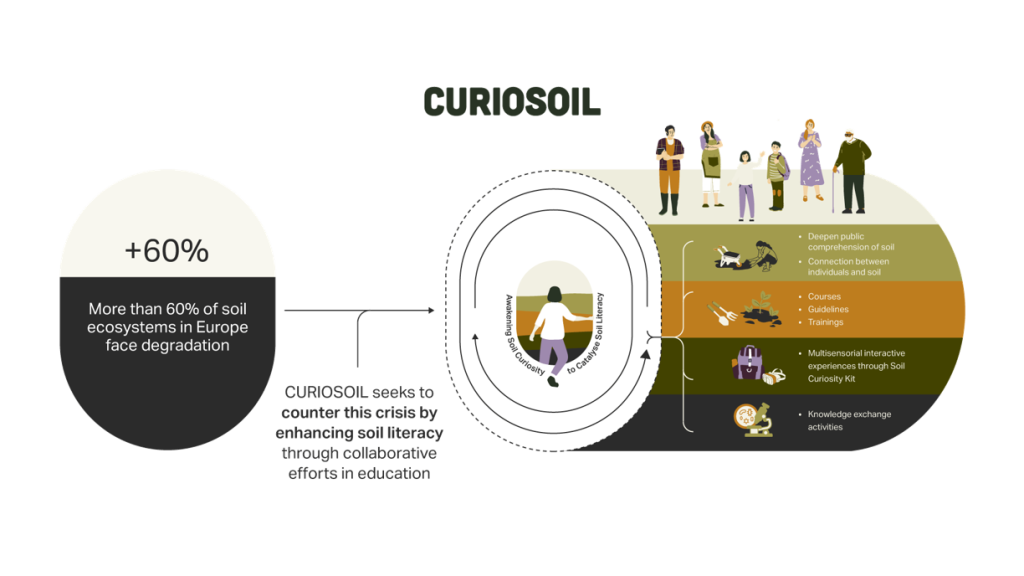
By collaboratively developing educational products, curriculum standards, and teacher training programs, CURIOSOIL aims to increase the appreciation of soil value and to align with the EU Mission “A Soil Deal for Europe.” This initiative cultivates soil literacy, engages citizens, and promotes sustainable soil practices. The project aims to integrate soil health into EU school curricula by 2030, fostering awareness, knowledge, and behavioural changes for a resilient and climate-smart future.
Running from 2024 to 2028, the project emphasizes different priorities each year. Benefits of participation in the Community of practice include early access to educational materials and financial support for national events. Indeed, a key workpackage “Engaging educational public authorities, policy and decision-makers” will deliver:
- 15 National workshops for the co-creation of recommendations for policymakers with a target attendance of >100 school and university heads
- 1 EU Final Conference with 100+ stakeholders and education policymakers
- 15 National and 1 EU policy briefs with recommendations for policymakers co-developed with school heads and education policy stakeholders
Project Progress and New Tools for Soil Literacy
The session featured a series of updates on CURIOSOIL’s main workstreams, each underscoring the growing toolbox of resources developed through a co-creative process involving educators, researchers, students, and community actors. Among the highlights was the Soil Curiosity Kit, a flagship resource pack designed to help teachers and educators foster inquiry-based, interdisciplinary learning experiences centered on soil. Henrique explained that the kit includes activities, guiding questions, worksheets, and cross-curricular prompts that can be tailored to local contexts and classroom realities.
Henrique encouraged participants to continue testing the Soil Curiosity Kit and providing feedback on its usability. A key request was for CoP members to explore how the materials could be adapted for various age groups, from early childhood to secondary education, and to report back on what works and what could be improved. The resource, he noted, is also designed with informal learning settings in mind, such as community gardens, science clubs, and museums.
The “Why I Teach Soil” campaign was another focal point. Launched in early 2025 in partnership with Revolve, the campaign features video interviews, testimonials, and social media assets that celebrate educators’ personal motivations for bringing soil into their teaching. Henrique reiterated the invitation for CoP members to identify and nominate national “ambassadors”—one teacher per country—who can serve as storytellers and motivators for others. These champions are instrumental in localizing the campaign and inspiring broader uptake among educators unfamiliar with soil-related content.
Evidence-Based Education: The Soil Literacy Assessment Framework
A major stride in 2025 has been the piloting and refinement of the Soil Literacy Assessment Framework, presented by Ingrid from Wageningen University. The framework provides a structured way to measure soil knowledge, awareness, and attitudes, initially targeting primary school students. With the first round of questionnaires being completed and reviewed, Ingrid shared early insights into how students engage with soil concepts—and where gaps remain.
Participants were encouraged to pilot the questionnaire in their countries and share translated versions to facilitate wider testing. This data will help inform policy and guide the development of targeted educational interventions. Henrique emphasized the framework’s potential to position soil education not just as a niche topic, but as a foundational component of environmental literacy, aligned with the European Green Deal and SDGs.
Forward Vision: Digital Tools and Participation Pathways
Looking ahead, the meeting previewed several exciting deliverables and engagement opportunities scheduled for the second half of 2025. Among them is the CURIOSOIL App, a virtual journey through the world’s soil museums, designed to make soil exploration interactive, accessible, and multilingual. The app is set to launch in July and will feature immersive content for learners and educators alike.

The team also shared progress on developing a Massive Open Online Course (MOOC) to support teacher training on soil topics, co-created with pedagogical experts and scheduled for release toward the end of the year. Henrique emphasized that the MOOC will offer flexible learning paths, practical classroom examples, and a European perspective on soil literacy.
Another core element of the project’s next phase is translation and localization. As the project matures, the team is working with national CoP leaders to ensure materials are translated into relevant languages and adapted to local educational systems. Henrique encouraged each country team to begin planning dissemination strategies that would align with upcoming events, such as school open days, festivals, and policy dialogues.
Working Together: National Breakouts and Collaborative Strategy
Following the plenary session, participants were invited to join national breakout rooms facilitated by each country’s CoP leader. These discussions served as a platform for sharing updates, identifying collaboration opportunities, and planning next steps in localized engagement. For countries where a national CoP leader was not yet present, participants remained in the main room with Henrique to explore regional collaboration or informal working groups.
These breakouts highlighted the strength of the CURIOSOIL model: a transnational vision grounded in local realities. National teams discussed plans to host classroom testing sessions, recruit more educators, organize workshops, and explore partnerships with municipalities, farms, and youth organizations. There was also strong interest in aligning CURIOSOIL activities with national soil days or biodiversity week celebrations.
Henrique encouraged every country to submit a brief roadmap outlining its strategy for the next six months—focusing on participation, dissemination, and policy influence. He reminded participants that all CURIOSOIL materials are open-source and can be adapted and shared freely.
A Growing Ecosystem of Soil Changemakers
The summer CoP meeting affirmed the growing momentum behind CURIOSOIL and its vision to create a Europe-wide culture of soil stewardship. It also reinforced that soil literacy is a collective endeavor, requiring the creativity of educators, the insight of scientists, the support of policymakers, and the engagement of young learners and communities.

As the meeting drew to a close, Henrique thanked all participants for their continued energy and invited them to stay involved in shaping the next stages of the project. He emphasized that the strength of the CoP lies in its diversity and distributed leadership, and that together, the community is laying the groundwork for a generational shift in how soil is understood, valued, and protected.
Synergies with Soil Mission projects: LOESS & CURIOSOIL
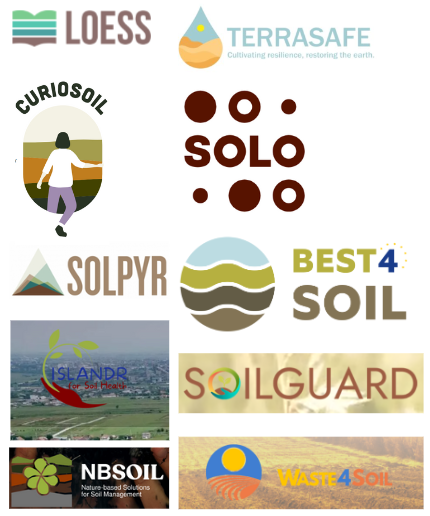
We would also like to highlight collaboration opportunities with the LOESS project, Literacy Boost through an Operational Educational Ecosystem of Societal Actors on Soil Health, and the potential learnings through the various Mission Soil and soil health-related projects:
You can read about these and all projects related to Mission Soil in their list.
Invitation to CURIOSOIL’s Back to School CoP meeting
The next transnational meeting is scheduled for 9th of September 2025, register now.

Be sure to follow our CURIOSOIL LinkedIn page and subscribe to our LinkedIn CURIOSOIL Newsletter.