
Co-creating a Just Transition with Regenerative Communities: ECOLISE’s Strategic Policy Workshop in Brussels
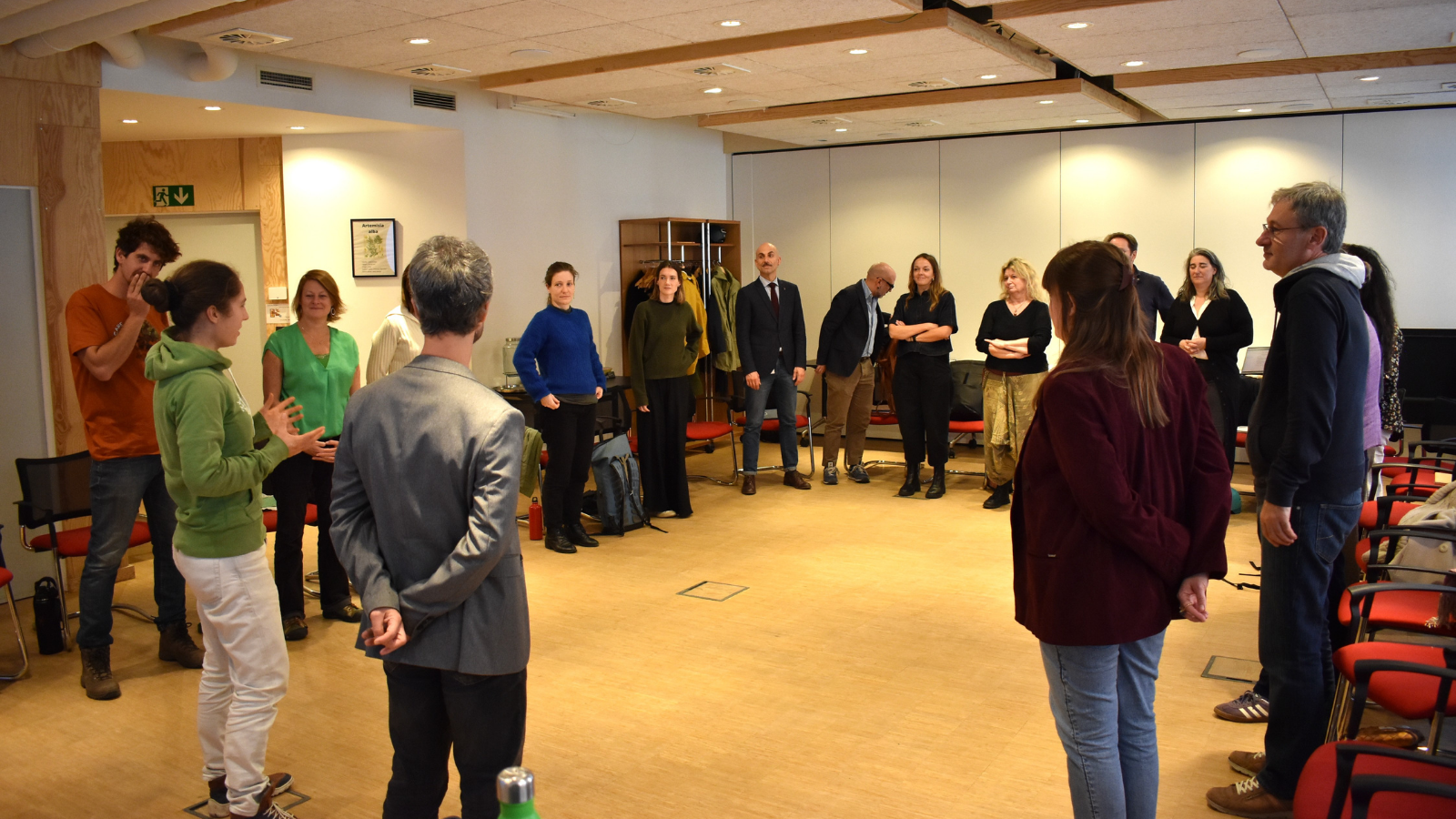
On November 5th, ECOLISE brought together around 30 stakeholders at Mundo Madou in Brussels, including policy-makers, funders, and civil society actors supporting regenerative, community-led action for a just transition, to join a strategic dialogue.
This policy workshop, organised within the Regenerative Communities Fund (RCF) through the Funding Fairer Futures (FFF) project, aimed to showcase the critical role of regenerative community-led initiatives (CLIs) in driving just and equitable transitions across Europe. It also provided a dedicated space to identify enabling conditions, address systemic barriers, and foster synergies and collaboration among diverse participants, paving the way for more effective policy support and long-term core funding.
Exploring, Imagining, Implementing: Co-creating a Collective Future Grounded in Real Experience
The workshop unfolded in three phases, guiding participants through a process of understanding, mapping and co-designing successful collaborations between policy stakeholders and regenerative CLIs.
After a warm welcome and an engaging introduction to ECOLISE and the RCF led by Juan Del Rio (RCF Lead, ECOLISE), Delia Bonsignore from the European Commission’s DG REGIO opened the session by sharing key insights from Communities for Climate (C4C), a pilot initiative launched by the EC in 2024 to explore new ways to support local climate action across Europe.
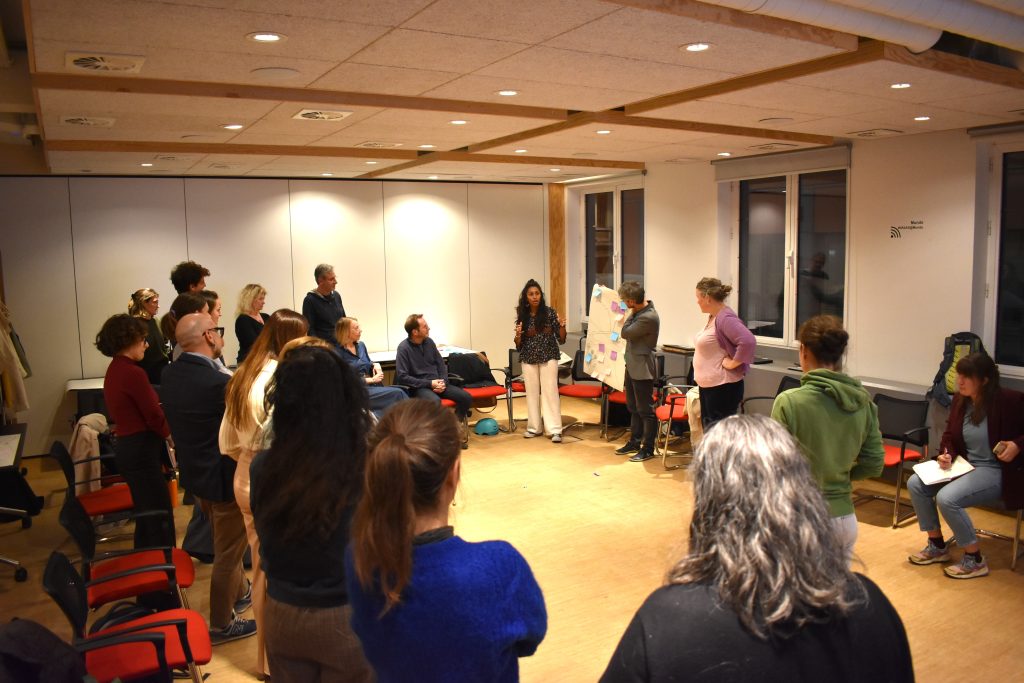
To ground the dialogue even more in real-world experiences, representatives from three RCF National Hubs, Rubén (ECORREDES, Spain), Teija (Jalotus, Finland), and Jean-Paul and David (CTC, France), presented outcomes from their National Policy Dialogues held during the European Day of Sustainable Communities (EDSC) in September. Moderated by Katerina-Shelagh Boucoyannis (Policy Lead and Project Manager, ECOLISE), their reflections spotlighted challenges, lessons learned from discussions with local policy-makers, and proposals to strengthen community-led just transitions.
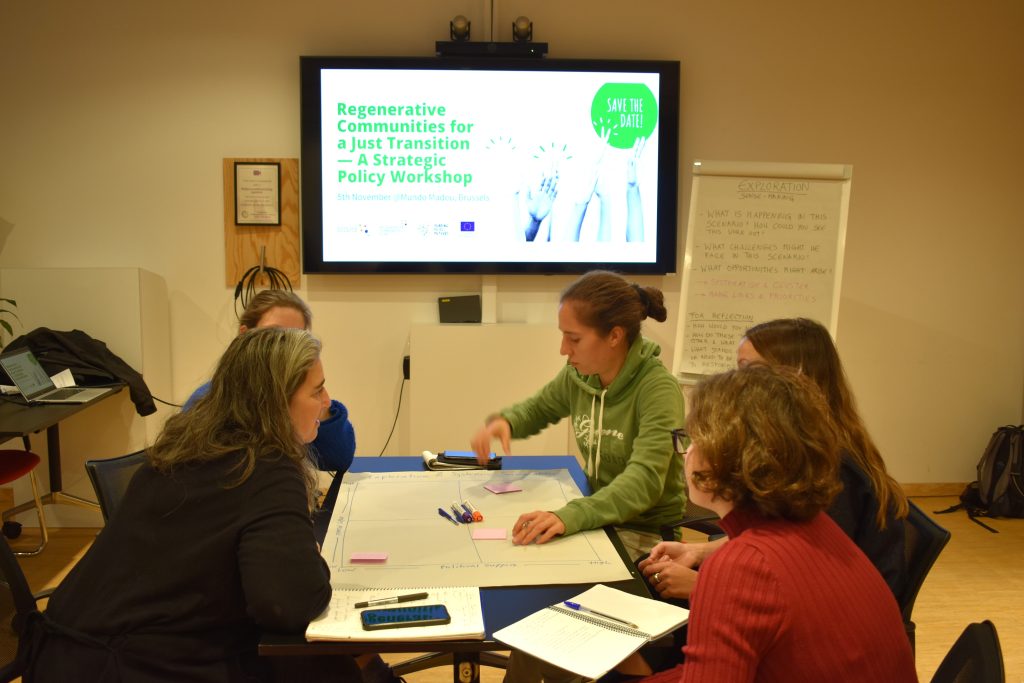
Building on these insightful presentations, participants engaged in a creative participatory exercise facilitated by Laura Kaestele (Network Lead and Weaver, ECOLISE). In small groups, they explored scenarios and systemic patterns, collected ideas, and co-imagined practical pathways for implementation. Colourful post-its filled the collaborative matrices, capturing imaginative inputs and insights that will now be analysed and synthesised into actionable outcomes.
The workshop ended with a Fishbowl session where participants exchanged reflections and inspiration. We closed the day with an informal networking reception, a fitting close to an afternoon rich of learning, creativity, and connection!
Moving Forward Together
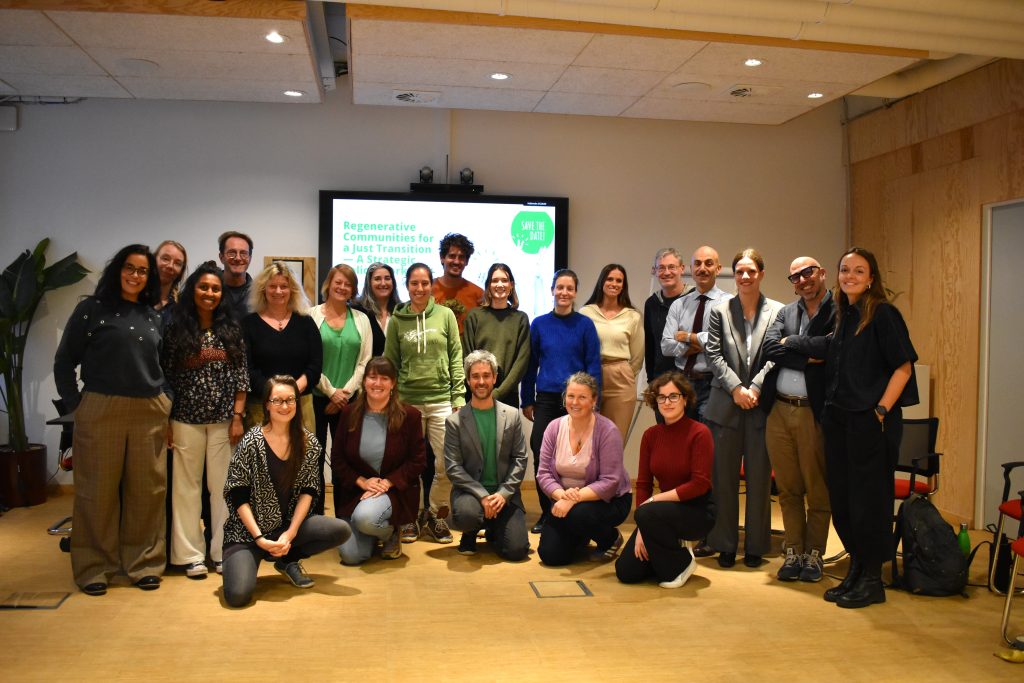
We are deeply grateful to all the participants who joined us for this event. Coming from across Europe, from Denmark to Greece, from Portugal to Finland and representing diverse backgrounds from grassroots initiatives to European institutions, each contributed to the success of this strategic dialogue! The insights gathered will feed into an upcoming workshop report, to be shared. We look forward to continuing this collaborative journey and invite you to stay connected through our News and Events webpages, social media channels, and newsletter for updates on future activities.
About the Regenerative Communities Fund (RCF)
The RCF is part of Funding Fairer Futures (FFF), a project co-funded by the European Commission under the DEAR Programme. It supports civil society organisations and community groups across Europe in delivering powerful, inclusive, and grassroots responses to the climate crisis.
The RCF helps community-led initiatives overcome barriers, like lack of funding, outreach, or technical support, especially in marginalised or underserved communities. Through an ecosystem of National Hubs, Demonstrators, and upcoming Pathfinder communities, RCF aims to build an inclusive movement for eco-social regeneration.
