
A Meal, a House, a Valley: Weaving a Culture of Generosity in Rural Spain
Written by: The Espacio Ubuntu team.
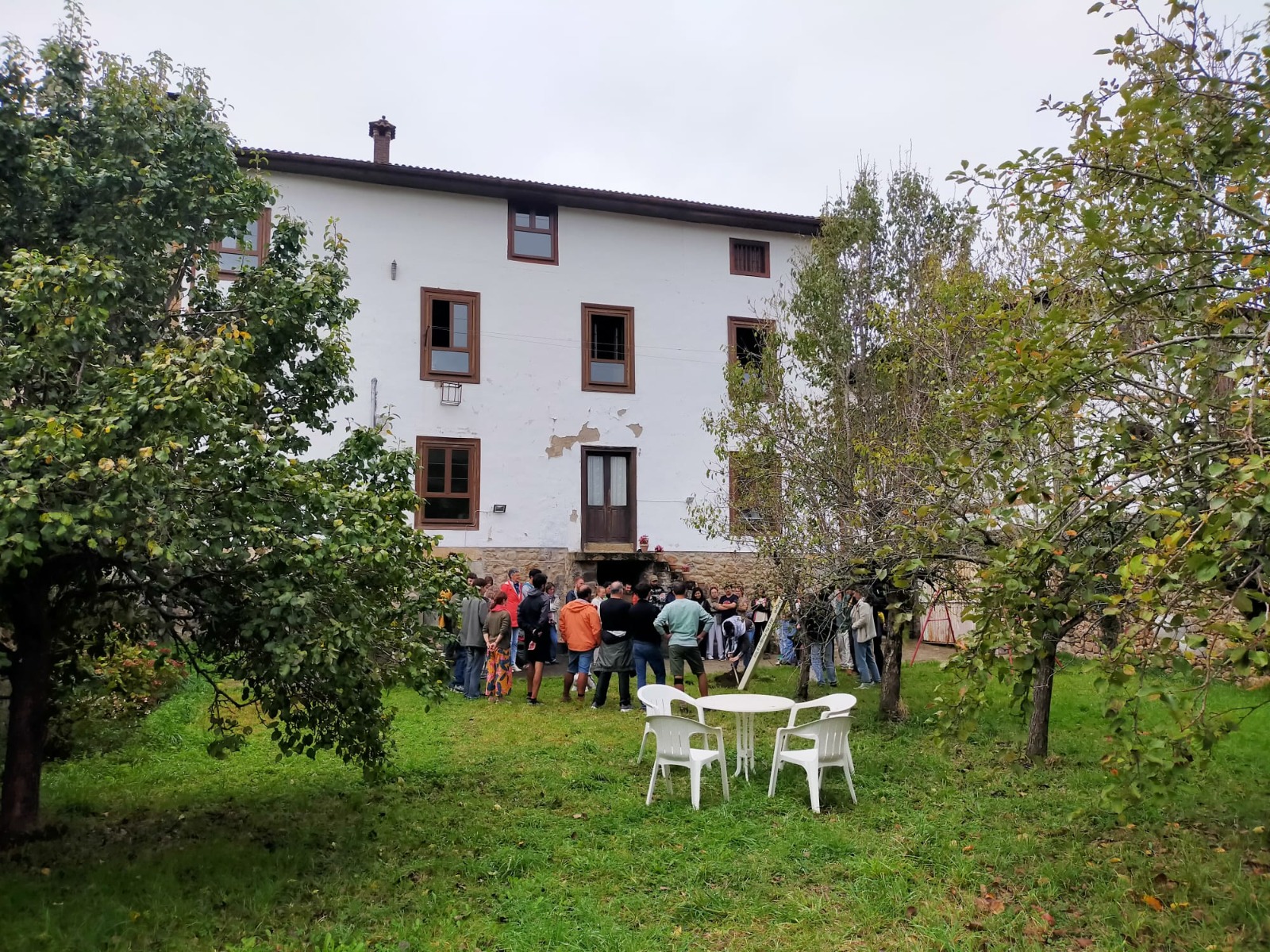
In the Valles Pasiegos, in the north of Spain, there is a small rural valley where old stone houses, green mountains and slow conversations still hold a memory of another way of living. People know that life is not only built through projects, funding or infrastructure. It is also built around a table, in a shared kitchen, in the silence before a circle begins, in the moment when a stranger becomes a neighbour.
This is the place where Espacio Ubuntu is growing.
Espacio Ubuntu began with a simple but radical intuition: that transformation is not only personal, and not only political. It is relational. It happens in the space between us. The word Ubuntu, often translated as “I am because we are”, reminds us that our wellbeing is deeply connected to the wellbeing of others, of our communities and of the Earth.
From that seed, Espacio Ubuntu has slowly become a living experiment in community, service, generosity and regeneration. We are not trying to create a perfect model. We are learning by doing, through small practices that invite people to experience a different culture: one based less on transaction and more on trust.
One of the clearest expressions of this is Karma Kitchen.
At Karma Kitchen, people come to eat. But when they finish their meal, they discover that there is no bill. Someone before them has already offered their meal as a gift. They are then invited, freely, to contribute so that someone else can receive the same gift in the future.
For some people, this is confusing. For others, it is deeply moving. In a world where almost everything has a price, a meal offered in trust can open a door. It becomes more than food. It becomes a small ritual of belonging.
We have seen people arrive as guests and return as volunteers. We have seen shy neighbours begin conversations with people they would never normally meet. We have seen children, elders, migrants, artists, facilitators, local people and international visitors sharing the same table. We have seen how a simple question — “What would you like to offer?” — can change the atmosphere of a room.
For us, this is culture and arts in their deepest sense.
Culture is not only what happens on a stage or inside a museum. Culture is the way we relate, the way we welcome, the way we celebrate, the way we grieve, the way we cook, the way we listen. Art is not only an object. It is also the art of creating spaces where people remember their dignity, their gifts and their connection to something larger than themselves.
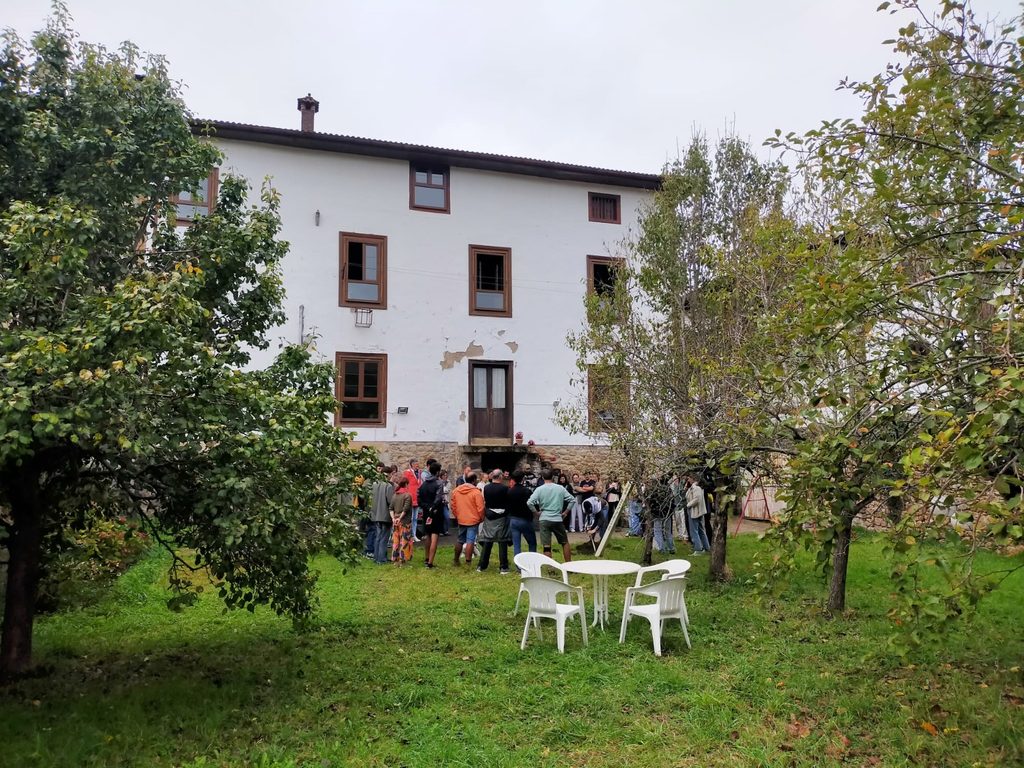
In Casa Ubuntu, our community house in Alceda, this culture becomes part of everyday life. People come for different reasons: to volunteer, to learn, to serve, to reconnect with purpose, or simply to be part of a more human rhythm for a while. The house is vegetarian, alcohol-free, simple and shared. It is not a retreat centre in the commercial sense. It is more like a living laboratory for the question: how can we live together in a way that supports inner transformation and social regeneration at the same time?
The answers are never abstract. They appear in very ordinary moments: cleaning together after a community meal, preparing tea before a circle, welcoming someone who has just arrived, listening to a local elder speak about the valley, organising a workshop, repairing a room, or sitting in silence before beginning a conversation.
Now, with the support of ECOLISE and the Regenerative Communities Fund, we are beginning a new phase: mapping, listening to and connecting local people and initiatives working for regeneration in Cantabria and especially in the Valles Pasiegos. We want to create a local memory and inspiration hub: a web of stories, interviews, gatherings and mutual support that helps the ecosystem see itself.
Because regeneration often begins before it has a name.
It begins with the farmer caring for the land, the teacher opening a different kind of classroom, the neighbour preserving local memory, the artist bringing beauty into forgotten places, the young person deciding to stay, the migrant bringing new life to a rural village, the group of volunteers serving a meal without asking who can pay.
Our work is to make these invisible threads more visible, and to strengthen them.
The challenges are many. Rural areas face depopulation, isolation, lack of opportunities, ageing populations and the loss of community spaces. At the same time, our wider society is facing loneliness, polarisation, ecological crisis and a deep feeling of disconnection. Many people want to contribute, but they do not know where to begin. Many communities have wisdom, but lack support, visibility and continuity.
We believe culture can help bridge this gap.
Not culture as entertainment only, but culture as a practice of peace. Culture as hospitality. Culture as shared memory. Culture as the courage to meet across differences. Culture as the capacity to imagine another future together.
This is why inclusion is central to Espacio Ubuntu. We try to create spaces where participation is not limited by money, background or status. Through donation-based events, volunteer opportunities, community meals, scholarships, shared living and international collaborations, we seek to welcome people from different cultures, generations and life paths. We are especially inspired by communities and movements around the world that practise service with humility: from Gandhi-inspired initiatives in India to local regenerative networks in Europe.
If we could share one message with policymakers, it would be this: please support the relational infrastructure of regeneration.
Communities do not transform only through buildings, strategies or technologies. They transform through trust. Through spaces where people can meet, create, eat, listen, sing, serve, remember and act together. These processes are often invisible, but they are the soil from which long-term change grows.
Small community-led initiatives need flexible funding, recognition, access to spaces, and support for the slow work of weaving relationships. We need policies that understand culture not as a decorative extra, but as a foundation for resilience, inclusion and ecological transition.
At Espacio Ubuntu, we are still learning. We make mistakes. We adapt. We listen. But again and again, we return to the same intuition: another world is not only possible; it is already appearing in small gestures of generosity.
A meal offered forward.
A house opened with care.
A valley remembering its gifts.
A stranger becoming part of the circle.
Maybe regeneration begins there. Not with the question, “How much does it cost?” but with a more beautiful one:
What can We offer?