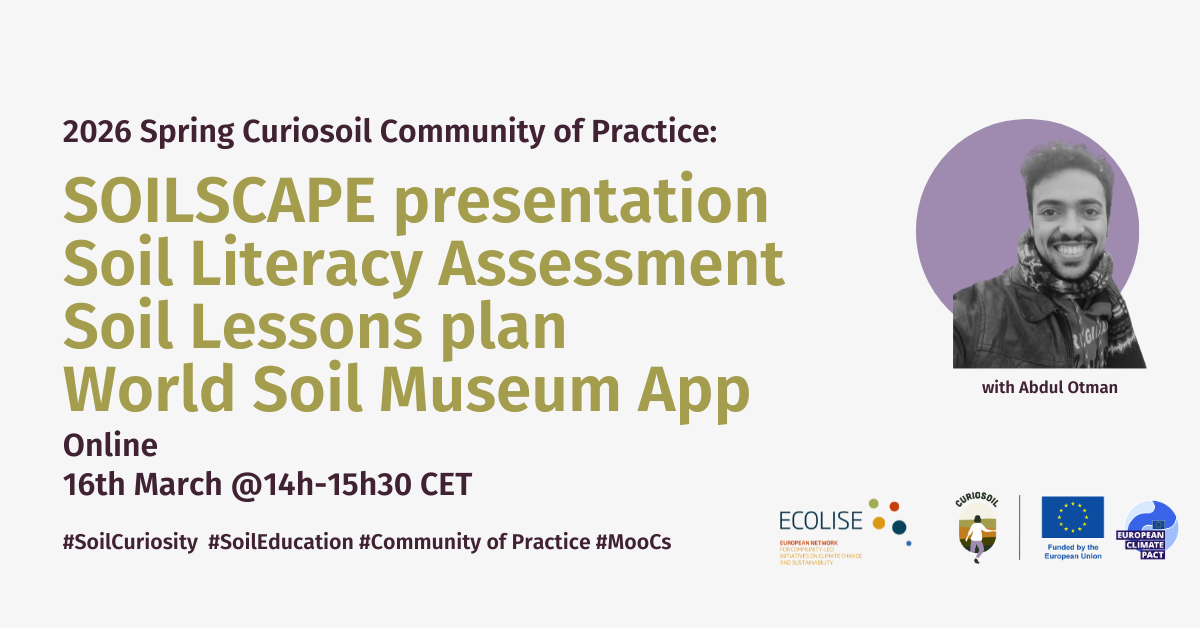
2026 Spring CURIOSOIL Community of Practice – From Soil Orchestras to Classrooms: Deepening Soil Literacy Across Europe
The CURIOSOIL Community of Practice (CoP) gathered once again to connect practitioners, educators, and innovators working to advance soil literacy across Europe. This session brought together a rich mix of project updates, practical tools, and collaborative discussions — reflecting the growing momentum behind community-led approaches to soil education. The exchange reflected a maturing ecosystem: one that is no longer only experimenting, but actively scaling tools, methodologies, and collaborations across Europe.
What stood out in this session was the interplay between cultural engagement and educational implementation — from large-scale artistic mobilisation to the practical realities of working with schools, teachers, and learners.
Resources from the session:
- The slides presented
- Lesson plans piloting link
- The feedback Survey of the World Soil Museum App as well as the QR code to access it through your phone
- The invitation for the 2026 Summer CURIOSOIL Community of Practice on 16th June 2026
- The recording below:
Be sure to follow our CURIOSOIL LinkedIn page and subscribe to our LinkedIn CURIOSOIL Newsletter.
Introduction to the CURIOSOIL Project
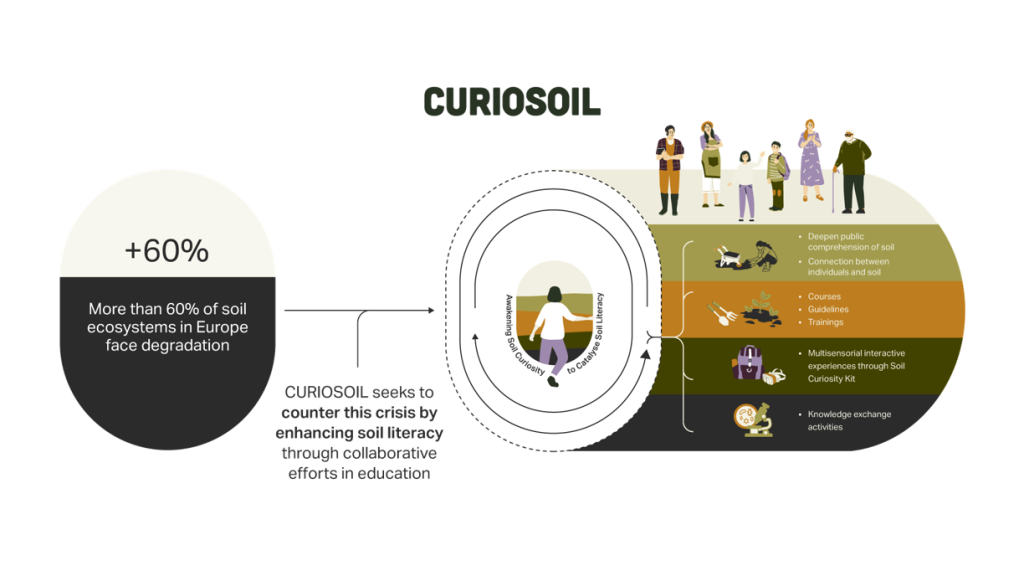
By collaboratively developing educational products, curriculum standards, and teacher training programs, CURIOSOIL aims to increase the appreciation of soil value and to align with the EU Mission “A Soil Deal for Europe.” This initiative cultivates soil literacy, engages citizens, and promotes sustainable soil practices. The project aims to integrate soil health into EU school curricula by 2030, fostering awareness, knowledge, and behavioural changes for a resilient and climate-smart future.
Running from 2024 to 2028, the project emphasizes different priorities each year. Benefits of participation in the Community of practice include early access to educational materials and financial support for national events. Indeed, a key workpackage “Engaging educational public authorities, policy and decision-makers” will deliver:
- 15 National workshops for the co-creation of recommendations for policymakers with a target attendance of >100 school and university heads
- 1 EU Final Conference with 100+ stakeholders and education policymakers
- 15 National and 1 EU policy briefs with recommendations for policymakers co-developed with school heads and education policy stakeholders
SOILSCAPE: mobilising culture for soil awareness at scale
Alain Brauman, president of the French Society of Soil Science, opened the session with an in-depth presentation of the SOILSCAPE Project (Spreading Open and Inclusive Literacy and Soil Culture through Artistic Practices and Education), illustrating how cultural approaches can significantly expand public engagement with soil.
The project has already:
- Built a network of over 440 multidisciplinary actors across Europe
- Reached 2.5 million people through its soil literacy open call
- Supported 36 selected initiatives, spanning artistic, educational, and community-led formats
Building on this foundation, Alain shared that SOILSCAPE is now transitioning from an experimental phase towards structured scaling across Europe.
The preparatory phase has laid the groundwork for a new approach to soil literacy that connects artistic practice, public engagement, and collective learning. Key milestones include:
- The SOIL Festival, creating public-facing moments of engagement around soil through the upcoming European Festival Sols & Arts 2026 (21–22 May) will serve as a key moment of convergence.
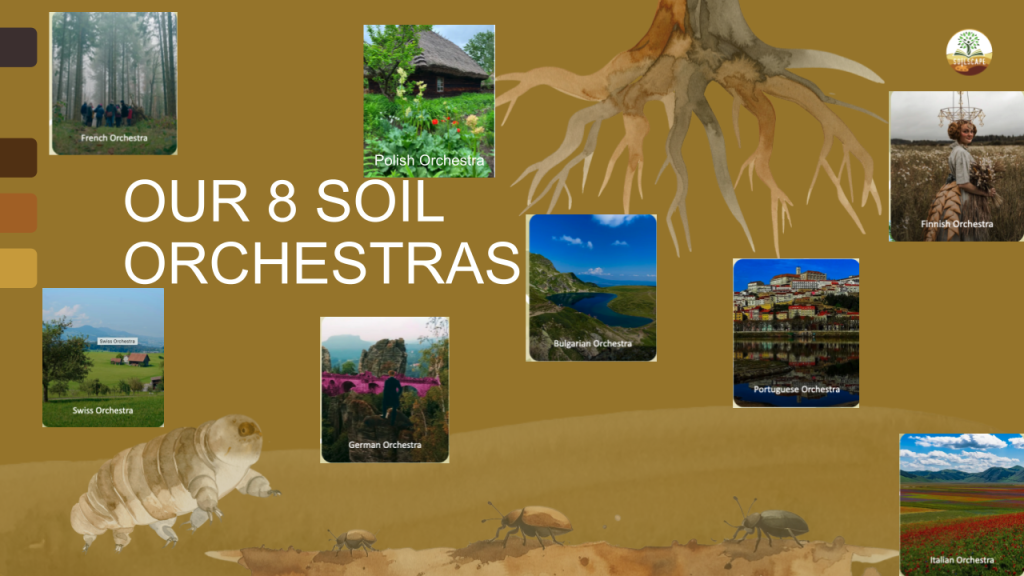
- The establishment of “soil orchestra” — a collective of artists, scientists, educators, and citizens co-creating experiences around soil. This metaphor is not only symbolic; it structures how collaboration and participation are organised across countries.
- A large-scale open call, mobilising diverse actors and initiatives
This phase reflects SOILSCAPE’s broader understanding of soil literacy — not only as knowledge acquisition, but as a cultural and relational process that connects people to soil through experience, creativity, and collaboration.
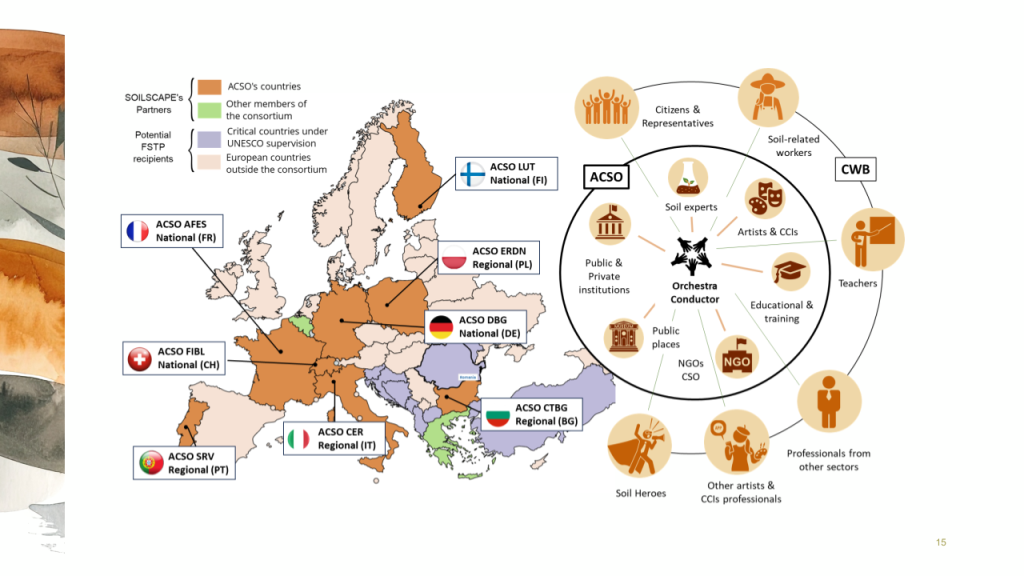
The project is now entering a phase focused on long-term sustainability and geographic expansion, with eight countries planning to host SOIL Festivals. Importantly, the model remains intentionally flexible: rather than replicating a single format, countries are encouraged to adapt the approach to their local cultural, ecological, and institutional contexts.
To support this distributed scaling, several enabling tools are being developed:
- A Soil Literacy Media Kit, strengthening visibility, storytelling, and dissemination
- A Soil Starter Pack, providing practical guidance for initiating and sustaining soil orchestras
- Structured support for forming and nurturing multidisciplinary collectives, bridging artists, scientists, educators, and communities
With 19 partners across 11 countries, SOILSCAPE is also investing in legacy: developing replicable tools and methodologies to enable similar networks to emerge in new regions. Please reach out to Mégane Roncier (megane.roncier@afes.fr) & Sophie Raous (sophie.raous@afes.fr) if you would like to connect.
Lesson plans: from design to piloting (link)
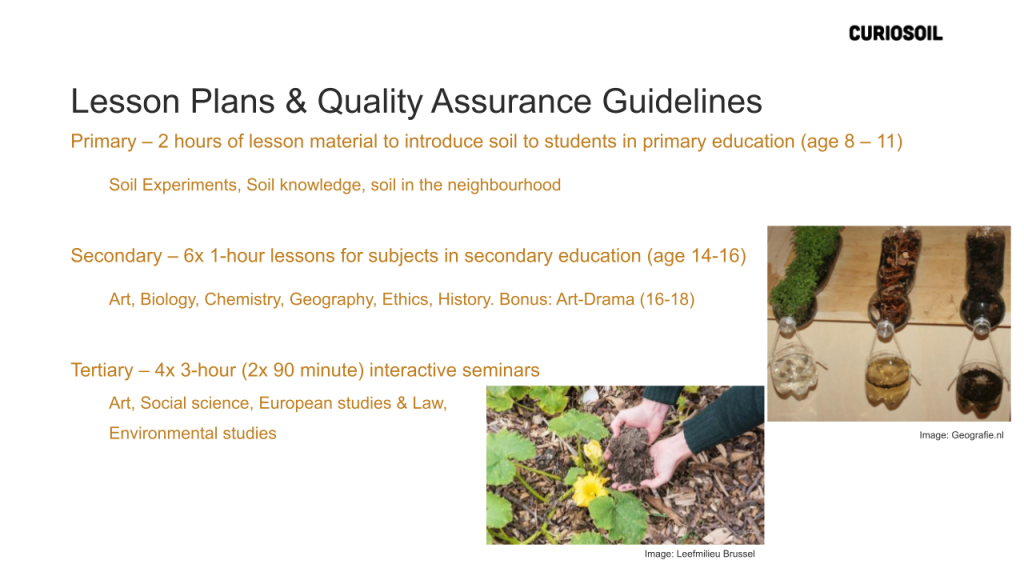
Myrthe Stienstra, from the European School Heads Association, introduced a comprehensive set of lesson plans developed within the CURIOSOIL project, covering primary (ages 8–11), secondary (ages 14–16), and tertiary education. Designed as interdisciplinary resources, the materials bring together art, science, and ethics to approach soil not only as a scientific subject, but as a cultural and relational one.
For primary education (ages 8–11), the content consists of approximately two hours of introductory material, combining soil experiments, basic knowledge, and connections to students’ immediate environment. At secondary level (ages 14–16), the approach expands into a series of six one-hour lessons integrated across subjects such as art, biology, chemistry, geography, ethics, and history — with additional extensions such as art and drama for older students. At tertiary level, the programme offers interactive seminars, engaging disciplines including social sciences, environmental studies, European studies, and law .
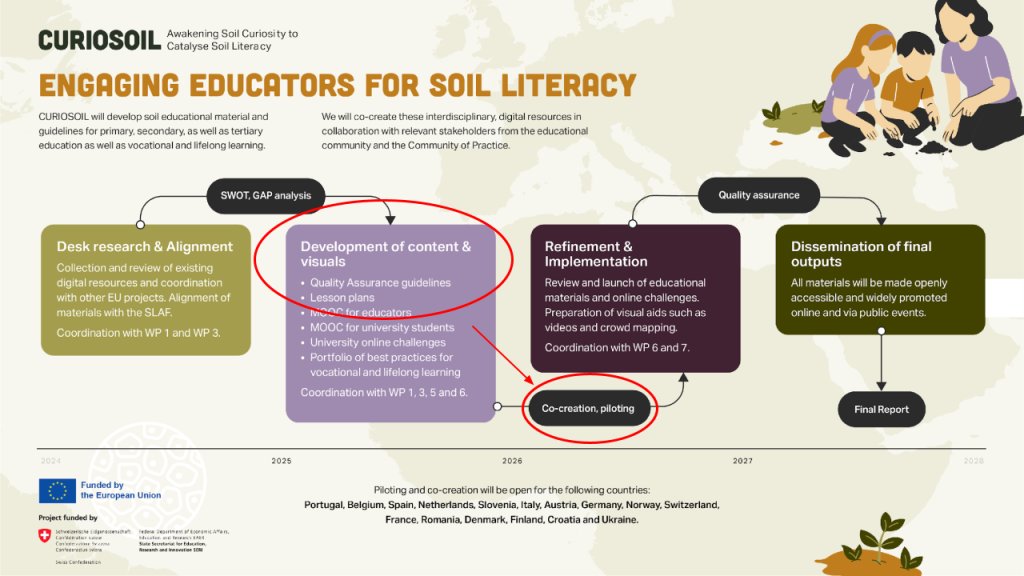
The focus of the session was on real-world testing and iteration. Educators — and participants connected to schools — were invited to pilot one or several lessons, share them within their networks, and contribute feedback through a dedicated form. Each lesson plan is distributed together with direct access to this feedback mechanism, ensuring that insights from practice can be systematically collected and reintegrated into future versions .
The piloting phase is already underway, with materials currently available in English, French, and Dutch, and additional translations planned. Participants are encouraged to test the lessons as soon as possible and submit feedback by the end of May, reinforcing the sense of a time-bound, collective experimentation process. Click here to start your piloting journey: https://ecolise.eu/curiosoil-lesson-plan-form-EN
Discussion during the session reflected the realities of implementation. Participants raised questions about how to access the materials, how flexible they are in practice, and whether they can be adapted across age groups or used in non-formal learning environments. The open licensing (CC BY-SA) and modular structure of the lessons were confirmed as key enablers, allowing educators to modify and combine content according to their needs.
What emerged clearly is that these lesson plans are not intended for one-to-one replication. Instead, they function as reference frameworks that support adaptation, enabling educators to translate soil literacy into their own pedagogical, cultural, and institutional contexts.
In this sense, the piloting phase is not just a testing step, but a core part of the methodology: a collaborative process through which the materials evolve, shaped by feedback, translation, and real-world use. This reflects the broader ambition of CURIOSOIL — to move from producing educational content to cultivating a living, participatory ecosystem for soil learning.
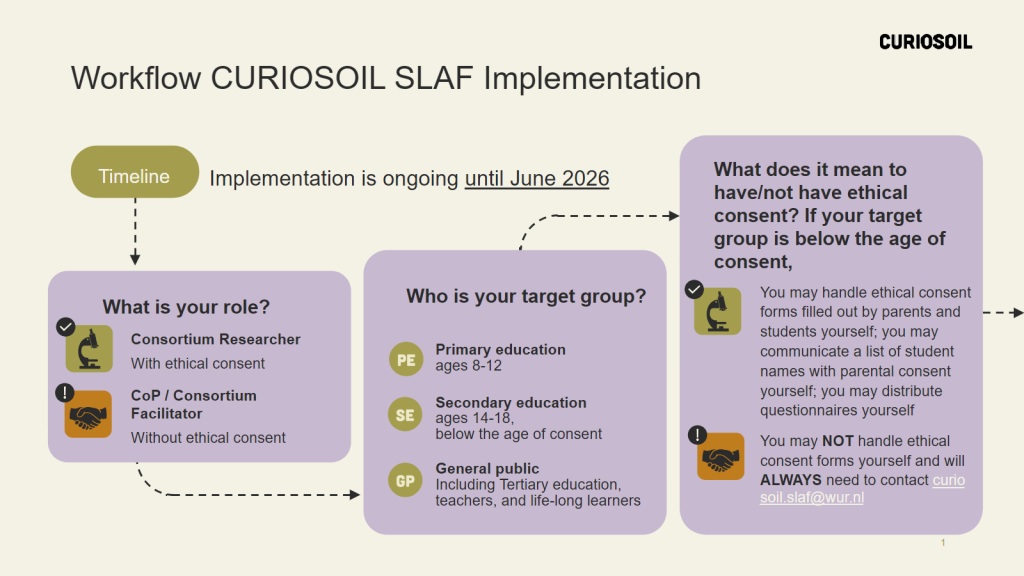
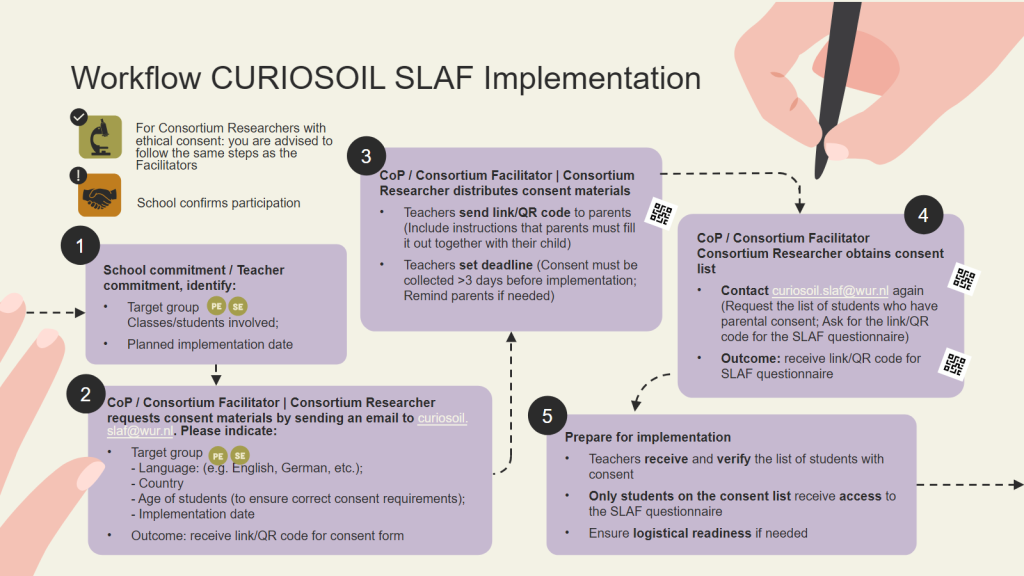
What is the Soil Literacy Assessment Framework?
The Soil Literacy Assessment Framework is a multidimensional assessment tool that measures soil literacy beyond factual knowledge. It recognises that soil literacy involves a combination of:
- Understanding soil systems and functions
- Attitudes and values toward soil
- Behaviours and intentions related to soil care and stewardship
By addressing these dimensions together, the framework captures both learning outcomes and transformative potential, aligning with CURIOSOIL’s mission to awaken soil curiosity and support long-term behavioural change.
Target groups and flexibility
The Soil Literacy Assessment Framework is designed for use across multiple audiences, including:
- Primary & Secondary education
- Young people aged 14+ and the general public
Rather than enforcing rigid age boundaries, the framework allows for educator judgement and contextual adaptation. This flexibility acknowledges differences in educational systems across countries and ensures the tool remains usable in real-world settings.
Role within the CURIOSOIL project
Within CURIOSOIL, the Soil Literacy Assessment Framework serves multiple purposes:
- Establishing baseline levels of soil literacy
- Monitoring change over time as participants engage with CURIOSOIL tools
- Generating evidence to inform educational practice and policy recommendations
By linking grassroots learning activities with structured assessment, the framework helps translate local experiences into European-level insights aligned with the EU Mission “A Soil Deal for Europe”.
Why the framework matters
The Soil Literacy Assessment Framework provides more than measurement—it offers a way to:
- Understand how people connect with soil
- Improve the design of educational tools and activities
- Strengthen the evidence base for soil education policy
By balancing scientific rigour, ethical responsibility, and practical usability, the framework supports a holistic approach to soil literacy, helping ensure that curiosity about soil can grow into lasting care and action.
World Soil Museum App
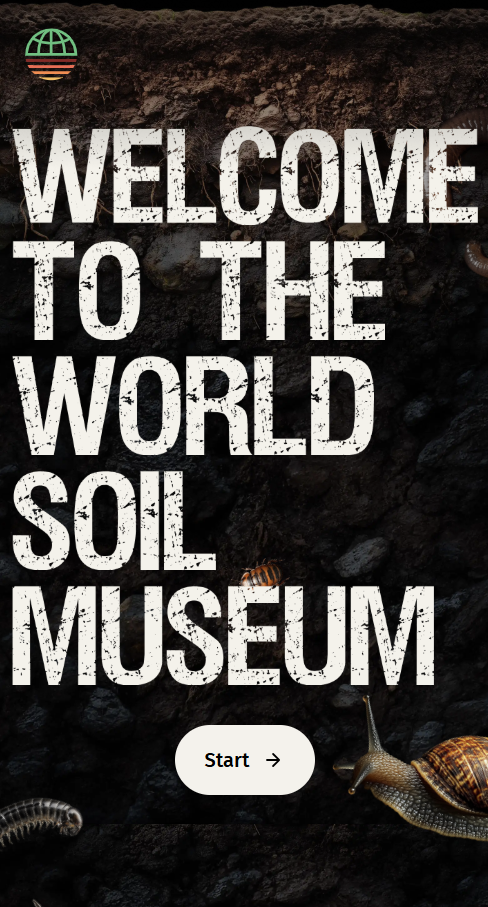
The meeting also previewed the launch of the CURIOSOIL App, offering a virtual tour of the World Soil Museum. The World Sound Museum App is taking shape as an immersive learning tool that introduces soil through sound, story, and multisensory exploration. Designed for both children and adults, the app combines audio narratives, visuals, quizzes, and 3D elements to create engaging pathways into soil knowledge.
Rather than presenting soil as an abstract scientific object, the app situates it within lived environments and landscapes, encouraging curiosity and emotional connection. As development progresses, the app is expected to become a key entry point for informal learning, complementing classroom activities and online resources.
You can click here to find the feedback Survey of the World Soil Museum App as well as the QR code to access it through your phone.
The app is being progressively translated into multiple languages, including Portuguese, Spanish, Slovenian, French, and Dutch, with contributions already emerging from educators and students across the network.
We would also like to highlight collaboration opportunities with the LOESS project, Literacy Boost through an Operational Educational Ecosystem of Societal Actors on Soil Health, and the potential learnings through the various Mission Soil and soil health-related projects:
You can read about these and all projects related to Mission Soil in their list.
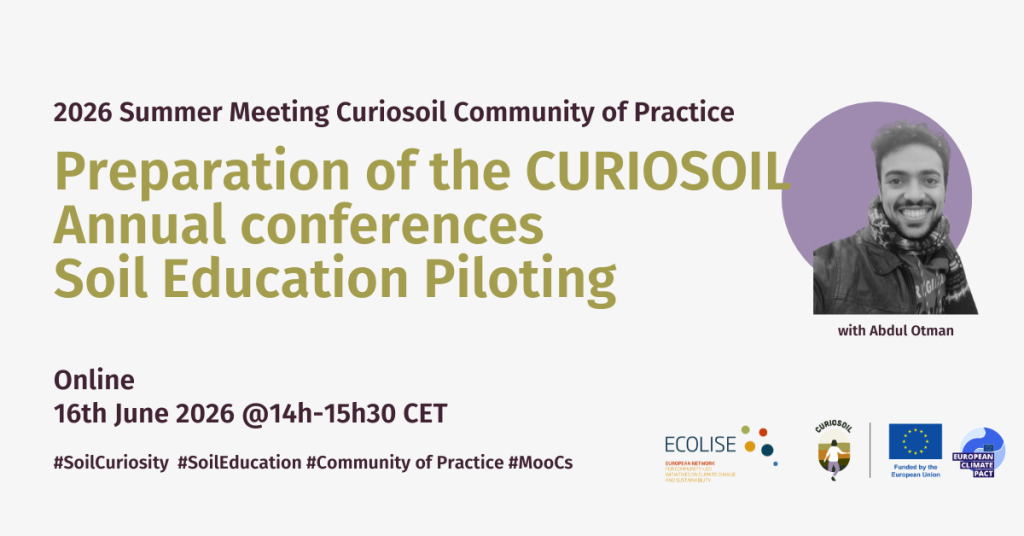
Invitation to CURIOSOIL’s 2026 Summer COP meeting
The next transnational meeting is scheduled for 16th of June 2026, register now.
Be sure to follow our CURIOSOIL LinkedIn page and subscribe to our LinkedIn CURIOSOIL Newsletter.